Key Competencies for the Future was release mid 2014 and explores the history, idealogy and understandings of New Zealand's Key Competencies. The authors; Rosemary Hipkins, Rachel Bolstad, Sally Boyd and Sue McDowall look at the Key Competencies from many angles and examine the important place that they have within our curriculum.
Right from the start of this book there were key elements and statements that stood out to me that really highlighted the importance of the Competencies for teachers. Particularly of interest was the concept of how even though the Competencies stand alone, they have to stand together. You cannot also look at them in isolation and piecing the picture together of how they fit and work together in the wider world is key to us as educators supporting our students with them.
"Key Competencies are actually cross-cutting of each other. We pull them apart to understand their individual character, but it's also important to stitch them back together when we put them to work in real contexts" - KCFTF (Key Competencies for the Future) Pg 16
I've really enjoyed following the VLN thread and webinar that happened as part of the Connected Educator Month - you can watch the webinar with 3 of the authors here. It's worth the watch and listen, even if you aren't currently reading the book.
There are such a wide range of concepts that stood out to me personally and for my practice and I particularly enjoyed the thinking around 'wicked problems'.
Wicked Problems: the idea of students being involved in real future focused problems that have relevancy and impact for their world. Concepts such as food security, sustainability, pollution and more. These are large scale problems that are difficult or impossible for people to solve due to a number of reasons, such as perspectives, scale etc. Read more on Wicked Problems here. Through this I was questioning how really future focussed our practice and selection of negotiated learning avenues have really been? Are they big enough with far reaching consequences that surpass the students' time in school. At uLearn I have had the opportunity to attend workshops run by Tom Barrett of NoTosh - in these workshops I have begun to explore Design Thinking further. Many comments and conversations with my colleagues during this workshop filtered back to themes and ideas from the Key Competencies for the Future book. Particularly around Wicked Problems, provocations and the design thinking journey.
Showing posts with label reflections. Show all posts
Showing posts with label reflections. Show all posts
Wednesday, July 29, 2015

Tuesday, September 16, 2014
Learning from Colleagues
Today I had my CRT (Classroom Release Time) in New Zealand we get 2 of these days per term. It depends school to school how these days are used - in my school we are able to choose how we spend these days to best meet our needs. So this means it can be anything from creating resources, viewing classrooms, testing, or one of the other million things we often have to do in our classroom lives! This term I have been lucky enough to spend time viewing teachers from 2 other schools as well as my own on these classroom release days.
I personally think that the more time we can spend with our colleagues and viewing other colleagues/classrooms the better. It helps us to reflect on our own teaching and understandings to build upon these. It helps us to view other ways to teach, to support and to learn alongside our students. Even if you don't particularly agree with the way that person is teaching - there are things to take from those situations. To reflect on and question how the way you support your students and if it is the right way for them.
"Everyone you will ever meet
knows something you don't"
- Bill Nye
This isn't something new or revolutionary - yet to me it speaks volumes. In teaching I am continuously in awe of my colleagues, within school and within my PLN, on a daily basis. There is always something new, different, exciting, thought-provoking or innovative happening to support our learners. Conversations and reflections happening that will make changes or just reinforce that the road we are travelling, however slow, is the right one for them.
So, on Friday I spent some of my time in 2 of my colleagues rooms - different teachers at very different stages of their careers. But each offering something to their learners that is right for them. The time that I spent in these rooms and the time these teachers took to speak to me was hugely appreciated.
In the first classroom I had the opportunity to see how in-depth and well thought out use of thinking tools and questioning was making a huge difference to the learners. They were able to draw on knowledge and vocabulary to 'compare and contrast' different people of greatness. They recognised different thinking tools and how they could be used to inform their investigations. I enjoyed the conversations with the students and was so impressed in the way they could articulate their learning pathways using the thinking tools to support them. There was a lot of visible thinking happening. The conversation with the teacher supported the importance of visible thinking and thinking tools to support our learners. It made me more aware of the choices I was making or not making in regards to thinking tools that would make my learners delve deeper and make connections between learning. The teacher was carefully choosing thinking tools from her extended knowledge that would best cater and support the learners. She was teaching them about why they would use the tools and helping them to extend these tools out into their everyday lives. We were able to talk about a range of systems and ideas she has running through her classroom - what they looked like and why she had chosen them. It was great to consider a different perspective on some things that happen daily in my classroom, and also some things that could happen more.
The visit to the next teacher was to see what she was doing as part of her writing programme. This year I have been investigating and re-working my writing programme, so I was interested to view another viewpoint or way of teaching. I had heard through several teachers of the work this teacher was doing to inspire a love of writing in her students using a 'Writer's Cafe'. So, on Friday afternoon I entered a classroom where, laid across the tables, were trays of brown sugar meringues for the students to enjoy. The awesome thing was not the food (even though it was amazing) but what was happening around the food... students spread out in small groups, pairs and solo writing. Writing. Yes, Friday afternoon and the room was a buzz of little authors who were penning their very own stories, chapter books, poems and more. One group of 4 girls didn't bat an eyelid the whole time I was in the room as they were so engrossed in working through their storyline. The thing for me wasn't the food, or even necessarily the writing. It was the way this teacher had seen a need for her students and explored new ways of making this happening. The food relaxed the environment - it's designed to be just like a cafe, where you pop in for a drink and a bite to eat and casually do your work... no pressure... no time constraints. It is working for her kids. She gives them the environment they need to be successful and she is seeing amazing results because of this. It was a great opportunity to talk to the teacher about what teachers are doing with writing and how we support kids in their passion and love for writing.
It was such a valuable day and I walked away from these classrooms inspired. I went back to my room to scrawl many notes, new ideas, reflections, thoughts and questions. For me, it's not about replicating ideas and teaching styles, but rather about questioning my own, so that I am constantly monitoring how I can be doing the best for the learners in my room. These teachers were listening to their students, their needs and wants and making changes to their classroom because of this. Both talked of their own journey and learning pathways they had undertook to make changes in their classrooms that were benefitting their students. I walked away in awe of two very inspiring teachers.
So, my challenge to you, is this... If you haven't been out and explored your colleagues classrooms in your own school or others this year - make it your goal for Term 4.
"The most valuable resource that all teachers have is each other. Without collaboration our growth is limited to our own perspectives"
- Robert John Meehan
- Robert John Meehan
Sunday, August 31, 2014
Term 3 Reflection - PML
PML (Planning My Learning) has changed a little bit - we have made changes to the structure of the board and moved it off the whiteboard. It just was time for it to change. I was finding the students were becoming more and more focussed on quantity rather than quality - it was about how many ticks were up on the board rather than the quality and time spent. So, armed with information from a conversation with the students, we made 2 changes to the PML system (in my head I have 100 - but we have to start somewhere!)
1. Quality Reflective Buddies - when we spoke about the problem of 'quality vs quantity' the students agreed - they were focussed on 'getting through' the list rather than pushing the boundaries of their learning. It was a great conversation and gave me insights in lots of ways. The students came up with 2 main solutions:
- Go back to the old way of working in blocks and everyone doing the same thing at the same time
- Have a person to meet with to share if your work is quality or not
Interestingly, the first idea came from a student who I know finds the challenge of planning his day more difficult, but when this was put to the class it was overwhelmingly challenged out (26-2). I'll be talking more with those 2 students to see how I can support them in developing their learning priorities.
The second idea is the one we have gone with - QLP or Quality Learning Partners. We had lots of discussion around how this could work. In the end I suggested stopping 15 minutes prior to the end of the day, so you could meet with your buddy and discuss your work, feed back, next steps etc. This is where we have started. The students then had the option to choose their own partner or to have some support from me to choose one. We had to discuss being able to be supported and open and honest with the person you choose. If you felt like you couldn't say 'hey, you need to go back and work on... to make this better' they probably weren't the person to be your QLP.
2. Leaving the Whiteboard - previously PML has been completed on the whiteboard. The students know I personally disliked this system, I shared this with them and the why I disliked it. But, I am not the one who has to work from it - so we carried on with it. As the term has progressed I have heard snippets of conversations as students tick off their work schedule for the day and these conversations led me to setting up a new full wall with the system on it. When introduced to the students I shared with them conversations and things that I had changed because of what I had heard. That it was these things that made the decision to make the change - I then asked if they would like to use it and the kids were keen! (Phew - there were a lot of lines to stick up and staple!) However, I knew many of my kids would need to see it before they would understand it.
.JPG) One of my students then asked the question I had been waiting for - "how will we tick to say we have worked on it?" "Great question" I replied... "How will we?" This led to 6 students taking on the construction of a system that we could use on the PML wall to show a range of learning happening. The last step was to share these with the rest of the class and then the students decided on voting for their favourite symbols that we will use.
One of my students then asked the question I had been waiting for - "how will we tick to say we have worked on it?" "Great question" I replied... "How will we?" This led to 6 students taking on the construction of a system that we could use on the PML wall to show a range of learning happening. The last step was to share these with the rest of the class and then the students decided on voting for their favourite symbols that we will use.
It was great to see a range of ideas being put forward that showed students were really keen to push quality over quantity with the refined system.
Writing has continued to develop based on need and interested rather than a genre. This week we were responding to a trip that we had to the Maritime Museum last week. We chose Newspaper Reports, Letters or a Recount. The students then signed up to the genre that they needed or wanted to write on. 3 different workshops then ran throughout the week and I continue to find the kids more engaged in their writing in this way.
There are a few challenges I need to work on...
1. Tracking the genres they choose. I'm thinking I will create a genres checklist that they can tick when they have completed a finished piece of writing in that genre. It will help them know more about the genres and what is out there also.
2. Creating/Finding/Sourcing/Using realistic, hands on and real life writing experiences that will foster the interest and passion of writing. Also fitting these into the daily life of a classroom. I have had a great conversation with the Year 2 teacher next door talking about how we may be able to both use this as a benefit to both our kids with their writing. More to reflect and think about here.
There are so many ideas, challenges and thoughts currently roaming around in my head that 'where to start' is often a daily challenge for me at the moment. My students have come a long way in concepts of knowing more about them as learners, having a voice within the classroom and making steps to be independent within their learning. But there is so much more that I want to challenge them and myself on.
My office buddy and I have great conversations on a daily basis - reflecting on our day, our learners, our teaching and our classrooms and I feel like those conversations help to clarify decisions that are made. I'm very lucky that we have younger students next door that provide a challenge and a platform for my students to be role models and teachers to them. At the moment we are continuing to explore how we can develop our space for our students further. This week we are beginning the younger students in planning and teaching workshops for the Year 2 and Year 5/6 students. I am looking forward to seeing how these develop over the rest of the term.
Each day I struggle more and more with the constraints of what traditional education. We can voice that we want ownership, student voice, self management, self-direction - but how does that actually work in the everyday education world with tests, assessments and standards? It's a big question. I'm ridiculously lucky in where I teach - I am trusted as a professional to make professional choices that best work because of my teaching knowledge, knowledge of my students and their learning.
There is so much that works about PML and the structure of my class but I know that it is not the end point of what I want the concept of school and learning to look and be like for my students. This week the first of my students for the year got underway with DRIVE Time projects - which are personal learning tasks driven by their passions/needs. There are lots of readings and thinking behind the way this is structured and was developed with a group of kids last year, based on these thoughts. DRIVE is about students owning their learning and making those decisions. At the heart is what learning actually is, our school values and school negotiated learning values as a teacher point hinge. This is the big point of where I would like to get to with my students across a more full time range. We (my students and I) are getting there... slowly... with careful thought and reflection... in time.
1. Quality Reflective Buddies - when we spoke about the problem of 'quality vs quantity' the students agreed - they were focussed on 'getting through' the list rather than pushing the boundaries of their learning. It was a great conversation and gave me insights in lots of ways. The students came up with 2 main solutions:
- Go back to the old way of working in blocks and everyone doing the same thing at the same time
- Have a person to meet with to share if your work is quality or not
Interestingly, the first idea came from a student who I know finds the challenge of planning his day more difficult, but when this was put to the class it was overwhelmingly challenged out (26-2). I'll be talking more with those 2 students to see how I can support them in developing their learning priorities.
The second idea is the one we have gone with - QLP or Quality Learning Partners. We had lots of discussion around how this could work. In the end I suggested stopping 15 minutes prior to the end of the day, so you could meet with your buddy and discuss your work, feed back, next steps etc. This is where we have started. The students then had the option to choose their own partner or to have some support from me to choose one. We had to discuss being able to be supported and open and honest with the person you choose. If you felt like you couldn't say 'hey, you need to go back and work on... to make this better' they probably weren't the person to be your QLP.
2. Leaving the Whiteboard - previously PML has been completed on the whiteboard. The students know I personally disliked this system, I shared this with them and the why I disliked it. But, I am not the one who has to work from it - so we carried on with it. As the term has progressed I have heard snippets of conversations as students tick off their work schedule for the day and these conversations led me to setting up a new full wall with the system on it. When introduced to the students I shared with them conversations and things that I had changed because of what I had heard. That it was these things that made the decision to make the change - I then asked if they would like to use it and the kids were keen! (Phew - there were a lot of lines to stick up and staple!) However, I knew many of my kids would need to see it before they would understand it.
One of my students then asked the question I had been waiting for - "how will we tick to say we have worked on it?" "Great question" I replied... "How will we?" This led to 6 students taking on the construction of a system that we could use on the PML wall to show a range of learning happening. The last step was to share these with the rest of the class and then the students decided on voting for their favourite symbols that we will use.It was great to see a range of ideas being put forward that showed students were really keen to push quality over quantity with the refined system.
Writing has continued to develop based on need and interested rather than a genre. This week we were responding to a trip that we had to the Maritime Museum last week. We chose Newspaper Reports, Letters or a Recount. The students then signed up to the genre that they needed or wanted to write on. 3 different workshops then ran throughout the week and I continue to find the kids more engaged in their writing in this way.
There are a few challenges I need to work on...
1. Tracking the genres they choose. I'm thinking I will create a genres checklist that they can tick when they have completed a finished piece of writing in that genre. It will help them know more about the genres and what is out there also.
2. Creating/Finding/Sourcing/Using realistic, hands on and real life writing experiences that will foster the interest and passion of writing. Also fitting these into the daily life of a classroom. I have had a great conversation with the Year 2 teacher next door talking about how we may be able to both use this as a benefit to both our kids with their writing. More to reflect and think about here.
There are so many ideas, challenges and thoughts currently roaming around in my head that 'where to start' is often a daily challenge for me at the moment. My students have come a long way in concepts of knowing more about them as learners, having a voice within the classroom and making steps to be independent within their learning. But there is so much more that I want to challenge them and myself on.
My office buddy and I have great conversations on a daily basis - reflecting on our day, our learners, our teaching and our classrooms and I feel like those conversations help to clarify decisions that are made. I'm very lucky that we have younger students next door that provide a challenge and a platform for my students to be role models and teachers to them. At the moment we are continuing to explore how we can develop our space for our students further. This week we are beginning the younger students in planning and teaching workshops for the Year 2 and Year 5/6 students. I am looking forward to seeing how these develop over the rest of the term.
Each day I struggle more and more with the constraints of what traditional education. We can voice that we want ownership, student voice, self management, self-direction - but how does that actually work in the everyday education world with tests, assessments and standards? It's a big question. I'm ridiculously lucky in where I teach - I am trusted as a professional to make professional choices that best work because of my teaching knowledge, knowledge of my students and their learning.
There is so much that works about PML and the structure of my class but I know that it is not the end point of what I want the concept of school and learning to look and be like for my students. This week the first of my students for the year got underway with DRIVE Time projects - which are personal learning tasks driven by their passions/needs. There are lots of readings and thinking behind the way this is structured and was developed with a group of kids last year, based on these thoughts. DRIVE is about students owning their learning and making those decisions. At the heart is what learning actually is, our school values and school negotiated learning values as a teacher point hinge. This is the big point of where I would like to get to with my students across a more full time range. We (my students and I) are getting there... slowly... with careful thought and reflection... in time.
Monday, June 2, 2014
PML 2014 - Tracking our Learning
PML is short for Plan My Learning, which is a phrase we use in Room 12 to explain how learners organise their daily learning tasks - the term was adopted from my amazing office buddy and team leader Kristyn a few years ago. During class time from the beginning of the day to around lunch time students plan their learning PML style - this is where they plan in what they are learning and when they are learning it. This means that at any one time in the classroom you could see students reading, working on maths, typing, writing, playing games, running workshops and more. While students plan their learning, I run group and 1-1 workshops for students in specific teaching areas for them. Sometimes these workshops are ability based and sometimes they work based on students goals and needs.
It's a huge system that takes a lot of time to establish in the classroom, but one that I am now convinced allows for a huge amount of self management and student voice. I have watched students take more ownership in their learning and choices through running the classroom in this way. Students are beginning to take up more opportunities to lead their learning and others' learning. We have a year 2 classroom next door and we have worked a lot with them to support the philosophy of 'Tuakana/Teina' in our classrooms and this is one that KW and I are continuing to reflect on and challenge. PML allows students time to run workshops and work with each other in a range of ways.
PML in 2014 had a rough start - my students were not in the same space as previous classes I have worked with, so systems that have worked before at the beginning of the year, didn't work so well. It required a lot of reflection, deep thinking and change from me. It was clear that the students needed and still need to develop their self management and reflective skills - which are 2 core areas we are currently continuing to work on. Through a lot of conversations and reflections with the students we have now created a system that is working well for the students and myself. This comes from time, reflection and conversations with the students - no other way. In this post and the following posts (as there is so much to this post I have split it!) I will explain and reflect on what has and is happening with PML this year.
Tracking Learning
At the beginning of the year we were using daily planners. These were piece of paper with a whole week timetable on them. Students would take what they had to complete for the week and plot this in throughout the week. Lots of students struggled with this and we soon realised it wasn't working, so after much discussion decided to try a To Do styled list. This was more suited to the class but again students were having problems as they disliked carrying their planning notebook around with them, they would forget to tick things they had completed off and a raft of other problems. We sat down as a class and talked about what wasn't working and why. Some students who I have again this year suggested using the format that we had used the previous year - the students were keen. It is a large whiteboard set up with room for each student to tick off their tasks for the week and a space for them to add any extras they had worked on. We continued to use the language of 'Learning Priorities' - the things that were the most important to them for their learning and 'Learning Possibilities' - other learning tasks they could undertake. The language we chose was important to the students. The whiteboard system has been a hit again this year as students felt there was more ownership to be taken as what they were doing was out there for all to see. I am not such a fan of the system, however, it allows me to see students who are finding tasks difficult or not getting through their tasks for the week and gives me a conversation starter to chat to them about their learning for the week. Though I'm not a fan of it, I know that it is my students who use it on a daily basis - so it doesn't really matter what I think, as long as it is working for them!
I have 3 students who work in different ways. 2 students use magazine boxes to track their learning on a daily basis, rather than weekly basis and 1 student who dislikes the whiteboard system but the To Do list was perfect for her. So at the start of the week, she creates her own To Do list in her notebook and she is away. The greatest thing about that is that she is starting to learn about what she needs to manage her workload and a way she can prioritise those things. Students with devices have begun to ask about planning on these and again this is a next step for us to find the best way that works for them.
At the beginning of the week we set up our 'Learning Priorities' on the whiteboard list - we have some consistent learning priorities then other ones that pop up as part of our weekly learning. Our more consistent learning tasks are DEAR (Silent reading), Maths work, Reading challenge, Basic Facts Practice, Maori Practice and Writing. Students have the opportunity to work on their specific goals or learning within each of these areas. Once these are set up and spoken about the students break off into their chosen Learning Priority. Over the last few weeks I have seen a real trend of students choosing to do DEAR at the beginning of the day - so we have an almost unusual silence that descends on the class during this time.
Tracking learning is more about the students being able to see what they are doing and how they are using their time during the week. It has allowed me to have a range of learning conversations with kids that contain strong evidence of how they are going with managing themselves, time and resources to complete what is expected. The skills that this entails are life long skills that as adults we strive to have. Managing our time, resources, skills, people and more are all small elements of PML that the students have to utilise on a daily basis. Students sometimes don't meet the target for the week and through their personal reflections you begin to see why this may have happened. On the whiteboard it may look like a student hasn't completed much - but then you can see that they have actually chosen to spend more time on completing a set task to a higher standard than they did previously. The first time always takes longer. First glance at our whiteboard doesn't always tell the whole story!
As part of being able to plan their week students need to see the big picture of what's happening in class. So for this reason students don't just see a what's on today - but rather a whole week view of what is happening in class. This allows the students to see what time they have for PML and when we have other events that may interfere with this. It is also teaching them about flexibility as sometimes planning a week in advance means that things change or don't happen in the same way. That they need to be prepared for this! The way that the weekly whiteboard has changed over the year so far is that there is more time set aside for iNeed workshops - which are student chosen workshops based on needs (I will explain these more in another post). The hardest thing seems to be that now that students have the ability to opt in and ask for these sessions - the more they want of them. Which is great, but a hard balance when there are still group sessions that need to be fit in! There are still a group of students who don't ask for iNeed workshops or haven't seen the relevance for them, which is something I am currently reflecting on as to why they might not be asking for these.
It's a huge system that takes a lot of time to establish in the classroom, but one that I am now convinced allows for a huge amount of self management and student voice. I have watched students take more ownership in their learning and choices through running the classroom in this way. Students are beginning to take up more opportunities to lead their learning and others' learning. We have a year 2 classroom next door and we have worked a lot with them to support the philosophy of 'Tuakana/Teina' in our classrooms and this is one that KW and I are continuing to reflect on and challenge. PML allows students time to run workshops and work with each other in a range of ways.
PML in 2014 had a rough start - my students were not in the same space as previous classes I have worked with, so systems that have worked before at the beginning of the year, didn't work so well. It required a lot of reflection, deep thinking and change from me. It was clear that the students needed and still need to develop their self management and reflective skills - which are 2 core areas we are currently continuing to work on. Through a lot of conversations and reflections with the students we have now created a system that is working well for the students and myself. This comes from time, reflection and conversations with the students - no other way. In this post and the following posts (as there is so much to this post I have split it!) I will explain and reflect on what has and is happening with PML this year.
Tracking Learning
At the beginning of the year we were using daily planners. These were piece of paper with a whole week timetable on them. Students would take what they had to complete for the week and plot this in throughout the week. Lots of students struggled with this and we soon realised it wasn't working, so after much discussion decided to try a To Do styled list. This was more suited to the class but again students were having problems as they disliked carrying their planning notebook around with them, they would forget to tick things they had completed off and a raft of other problems. We sat down as a class and talked about what wasn't working and why. Some students who I have again this year suggested using the format that we had used the previous year - the students were keen. It is a large whiteboard set up with room for each student to tick off their tasks for the week and a space for them to add any extras they had worked on. We continued to use the language of 'Learning Priorities' - the things that were the most important to them for their learning and 'Learning Possibilities' - other learning tasks they could undertake. The language we chose was important to the students. The whiteboard system has been a hit again this year as students felt there was more ownership to be taken as what they were doing was out there for all to see. I am not such a fan of the system, however, it allows me to see students who are finding tasks difficult or not getting through their tasks for the week and gives me a conversation starter to chat to them about their learning for the week. Though I'm not a fan of it, I know that it is my students who use it on a daily basis - so it doesn't really matter what I think, as long as it is working for them!
I have 3 students who work in different ways. 2 students use magazine boxes to track their learning on a daily basis, rather than weekly basis and 1 student who dislikes the whiteboard system but the To Do list was perfect for her. So at the start of the week, she creates her own To Do list in her notebook and she is away. The greatest thing about that is that she is starting to learn about what she needs to manage her workload and a way she can prioritise those things. Students with devices have begun to ask about planning on these and again this is a next step for us to find the best way that works for them.
At the beginning of the week we set up our 'Learning Priorities' on the whiteboard list - we have some consistent learning priorities then other ones that pop up as part of our weekly learning. Our more consistent learning tasks are DEAR (Silent reading), Maths work, Reading challenge, Basic Facts Practice, Maori Practice and Writing. Students have the opportunity to work on their specific goals or learning within each of these areas. Once these are set up and spoken about the students break off into their chosen Learning Priority. Over the last few weeks I have seen a real trend of students choosing to do DEAR at the beginning of the day - so we have an almost unusual silence that descends on the class during this time.
Tracking learning is more about the students being able to see what they are doing and how they are using their time during the week. It has allowed me to have a range of learning conversations with kids that contain strong evidence of how they are going with managing themselves, time and resources to complete what is expected. The skills that this entails are life long skills that as adults we strive to have. Managing our time, resources, skills, people and more are all small elements of PML that the students have to utilise on a daily basis. Students sometimes don't meet the target for the week and through their personal reflections you begin to see why this may have happened. On the whiteboard it may look like a student hasn't completed much - but then you can see that they have actually chosen to spend more time on completing a set task to a higher standard than they did previously. The first time always takes longer. First glance at our whiteboard doesn't always tell the whole story!
As part of being able to plan their week students need to see the big picture of what's happening in class. So for this reason students don't just see a what's on today - but rather a whole week view of what is happening in class. This allows the students to see what time they have for PML and when we have other events that may interfere with this. It is also teaching them about flexibility as sometimes planning a week in advance means that things change or don't happen in the same way. That they need to be prepared for this! The way that the weekly whiteboard has changed over the year so far is that there is more time set aside for iNeed workshops - which are student chosen workshops based on needs (I will explain these more in another post). The hardest thing seems to be that now that students have the ability to opt in and ask for these sessions - the more they want of them. Which is great, but a hard balance when there are still group sessions that need to be fit in! There are still a group of students who don't ask for iNeed workshops or haven't seen the relevance for them, which is something I am currently reflecting on as to why they might not be asking for these.
 |
| This was our whiteboard earlier in the year - same format but very different now! |
In following posts I will share and reflect on the other key elements of PML such as students knowing their learning, student voice and reflection. These all place a integral part in the way the classroom is structured.
Saturday, May 31, 2014
Immersion Week
Our big theme this term is 'Dream It, Think It, Do It!' so KW and I designed a week of immersion which allowed our students to be involved in a range of ideas and topics to allow us to negotiate the learning path with our students. In our school we work in pods - this year my pod of 4 classroom consists of 2 Year 2 classes, 1 Year 1 class and my own year 5/6 class. KW and I planned a range of learning opportunities and also within our immersion week we held 4 sessions where each teacher from our pod took a different immersion session where we split our students up within the 4 groups. Within this pod time we saw students take on game making, drama, modifying sports and hat creation challenges that saw them working within different aspects of creativity.
For the rest of the week KW and I planned immersion learning opportunities for our Year 2 and Year 5/6 students to be working alongside each other. Each activity was carefully planned to allow students to work within 6 main dispositions to develop their understanding of 'Dream It, Think It, Do It!' We identified 'flexibility, risk taking, creativity, thoughtfulness, thinking and challenge' as our key dispositions and these became our focus of conversations and reflections with the students throughout the week.
Our first challenge for the week was simple in spirit but provided a wealth of information for us, as teachers. We collected as many boxes and bits that we could find. Large, medium, small and more... we had them all! From this we started with very little instructions... choose some boxes - create something! This was to give us a range of information about our students! We were expecting some far our creations, but found we had very 'normal' creations - a house, a bus, a rocket ship. It allowed us to see that risk-taking for our students is a key disposition. So after a lot of discussion, we decided to set up a 'ninja cave' the next morning. This was a huge hit for the students the next morning when they came in to find it - it ended up morphing throughout the weekend to become more and more challenging each morning. It was through our 'ninja cave' that we were able to have an amazing conversation around risk-taking and what that entails.

We discussed what makes risk-taking harder and examined elements such as 'when people are watching' the risk level can go up. Our principal arrived on the tail end of this conversation and was then invited to take the risk. The kids were more than stoked to see their principal go through the 'Ninja cave' and supported him with a huge cheer and pakipaki at the end.

The biggest learning curve for most students was the concept of 'guerrilla knitting' or yarn bombing. The idea being a semi-permanent form of street art that changes the street side from the drab into the colourful. It's the concept of creativity for giving and thoughtfulness that we were working with through this learning experience. So we headed out to our school fence with balls of wool and got to work to create our rather plain looking school fence into a work of art. The students worked in pairs - 1 Year 5 or 6 student with 1 Year 2 student and began with small hearts. However, students soon wanted to try different patterns and designs and got more enthusiastic as they saw the fence take shape. We ended up with some diamonds, larger hearts, S and L shapes. Unfortunately time and weather was a factor for us and we have both spoken about heading out with our classes to work on these again. The concept of their own creativity for giving was one that was talked about over and over again during the week.


For the rest of the week KW and I planned immersion learning opportunities for our Year 2 and Year 5/6 students to be working alongside each other. Each activity was carefully planned to allow students to work within 6 main dispositions to develop their understanding of 'Dream It, Think It, Do It!' We identified 'flexibility, risk taking, creativity, thoughtfulness, thinking and challenge' as our key dispositions and these became our focus of conversations and reflections with the students throughout the week.
Our first challenge for the week was simple in spirit but provided a wealth of information for us, as teachers. We collected as many boxes and bits that we could find. Large, medium, small and more... we had them all! From this we started with very little instructions... choose some boxes - create something! This was to give us a range of information about our students! We were expecting some far our creations, but found we had very 'normal' creations - a house, a bus, a rocket ship. It allowed us to see that risk-taking for our students is a key disposition. So after a lot of discussion, we decided to set up a 'ninja cave' the next morning. This was a huge hit for the students the next morning when they came in to find it - it ended up morphing throughout the weekend to become more and more challenging each morning. It was through our 'ninja cave' that we were able to have an amazing conversation around risk-taking and what that entails.
We discussed what makes risk-taking harder and examined elements such as 'when people are watching' the risk level can go up. Our principal arrived on the tail end of this conversation and was then invited to take the risk. The kids were more than stoked to see their principal go through the 'Ninja cave' and supported him with a huge cheer and pakipaki at the end.
The biggest learning curve for most students was the concept of 'guerrilla knitting' or yarn bombing. The idea being a semi-permanent form of street art that changes the street side from the drab into the colourful. It's the concept of creativity for giving and thoughtfulness that we were working with through this learning experience. So we headed out to our school fence with balls of wool and got to work to create our rather plain looking school fence into a work of art. The students worked in pairs - 1 Year 5 or 6 student with 1 Year 2 student and began with small hearts. However, students soon wanted to try different patterns and designs and got more enthusiastic as they saw the fence take shape. We ended up with some diamonds, larger hearts, S and L shapes. Unfortunately time and weather was a factor for us and we have both spoken about heading out with our classes to work on these again. The concept of their own creativity for giving was one that was talked about over and over again during the week.
The coolest element of this was the reaction they saw from their peers, teachers and families. On Friday we arrived back to class to an awesome letter. This letter now has pride of place in both our classrooms on our door - so everyone entering can read it!
These are just a selection of the learning experiences we developed as part of our immersion week with our students. We also designed playgrounds, made marble runs and more. It allowed the students a wide range of experiences and allowed us to see where our students interests and passions lay for our next steps of the negotiated learning path. I really enjoyed collaborating and planning with KW and it allowed us to each draw on our own experiences and strengths. I learnt a lot from working more closely with her and it was great being able to sit down at the end of each day and reflect on what we saw for each of our kids.
At the end of the week we used the Kath Murdoch 'Learning Wheel' as a reflection tool for the week to help us decide where our next steps were and the guerilla knitting was a firm favourite. From our Learning Wheel reflections and conversations my class have chosen to go down the path of investigating 'how my creativity can benefit others'. I'm really looking forward to seeing where we go with this!
Thursday, May 8, 2014
BYOD in the Classroom
At the BYOD day in the holidays I had the pleasure of presenting with my colleague Jessicca Vidal on BYOD in the Classroom.
During the session we shared the organisation of our classrooms and where the design for our classrooms comes from. We then shared how to support students with BYOD, why we choose particular tools and how to get underway with BYOD in the classroom. During the final part of our presentation we shared some examples of different tools we use to support learning.
During the session we shared the organisation of our classrooms and where the design for our classrooms comes from. We then shared how to support students with BYOD, why we choose particular tools and how to get underway with BYOD in the classroom. During the final part of our presentation we shared some examples of different tools we use to support learning.
Friday, September 6, 2013
Journeys and Reflections
A few weeks ago I had the privilege to head away with my team of talented teachers on a road trip to explore 3 schools in Pahoia and Papamoa. This is the 2nd such day our team has taken on by utilising out CRT days together and heading off to view amazing educators in action. Our last day was out visiting schools in Auckland.
Before our visits we sat down on several occasions to talk as a team about what we wanted to see, hear and discuss by visiting schools. These conversations helped us to structure our guiding questions that were the base of how we selected schools. From here we spoke with educators we knew to locate schools that would help us focus on our guiding questions. Our key emphasis this visit was on open learning spaces, negotiated learning, student ownership and the practice of reflection within the learning. Big ideas to look at and we were more than excited about the day of visits.
The schools we visited allowed us to see a range of different understandings, directions and thinking. It was a great opportunity to talk about the things that mattered to different schools and communities and why those things were important. It allowed us to see some of the big picture of what small decisions in classrooms can mean or do school wide.
The 2 key themes coming from all the schools we visited were the importance of 'relationships' and 'systems' to team teaching/open learning spaces. We were really excited about discussing these key themes with the schools, but then again afterwards amongst ourselves as we reflected on our own journey.
Relationships:
A key element of a successful teaching team is the relationship between the teachers involved. A high level of trust, integrity, support, friendship and willingness is required to work in such a close space. You are consistently a reflective buddy, support person and general day to day go to person for each other. A shared understanding about what path the classroom is on is required to make sure that a clear path is created for the students working within the space. What are your shared beliefs, understandings and ideas that underpin what is happening in your classroom space? How well do you work together to make the things you want to happen in your class move from visions to happenings? Just some of the important questions that teachers spoke of considering and thinking about.
Many principals spoke about the fact that these relationship often need to come from the teachers rather than be selected by the management team. The driving force behind these relationships need to come intrinsically from the teachers. This is where a lot of management have seen the most effective classrooms, as the teachers have established that the strong relationship is there.
Systems:
What clear systems are in place to allow teachers and students to work within the shared space? Do all people in that shared space have the same understanding about the little things as well as the big things in the class - where do the kids put their book bags in the morning? To the bigger decisions - how will we group our students for ... subject? The systems in place need to be steadfast and supported by all individuals. In one class in particular we saw extremely clear and effective systems in place in all avenues of the classroom practice that supported both students and teachers to work in the space. From planning, classroom space, organisation etc - the small systems in place guided all parties to use the space for effective learning.
There are also a lot of people who need to navigate day to day classroom systems - are these systems clear to you, the students and the parents? Some of the schools we visited spoke about 'Guardian Teachers' in the open plan environment. This system gave each parent an opportunity to feel like they had 1 parent to talk to in regards to issues/concerns and general day to day business. This didn't mean that the student and teacher belonged specifically together, but it was a system that allowed parents to have a means of communication with one of the teachers. A simple but effective system had been established for students, teachers, parents and management. What was also great was being able to speak to most people along that chain and hear the same systems communicated from each party - one sign of effective systems being in place.
Moving Forward...
We took the time after each school to share our understandings, ideas, reflections and new thinking with each other. This time was extremely valuable. I feel privileged to work in the team that I do. We have both relationships and systems happening currently that support and develop a range of powerful teaching and learning. Our ability to work as a team and reflect on what we are doing and why it is working well is one of our strengths. I felt that the themes the schools shared with us were a key element of a successful open plan teaching environment. Yes, there are other factors but with great systems and amazing relationships some real magic can happen for the students and teachers.
Our team has used the opportunity to walk away and think about what is really important for each of us within our classroom environments. It was great to affirm some of the things we have already placed such as shared assessment documents across our pod that is allowing us to cater for our student's needs across our pod and teachers - not just within our own classrooms.
My 2 colleagues have spent time analysing what they do and why it is important to them and then coming together to share with each other what these elements are as they continue on the journey of working in an open plan space. There is so much more that they are doing - but that is their journey to share! I am just privileged to be along for the journey with them as they make amazing steps in their own practice and their student's learning.
For myself, there has been a lot of assessing and balancing thoughts and ideas of my own. It is helping to cement for me the importance of the open plan environment and what can be offered by working in a space with multiple students and teachers. It has helped me to reflect on the opportunities I have had over the last few years to work with some amazingly talented people. There is a lot to move forward with, for myself and my team.
We were extremely grateful to the principals, team leaders, teachers and students who gave up their time to share their learning, thought processes and journey that they are on in order for us to follow our own. We are also grateful to our own school that allows us the opportunity to use our CRT days in this way and support us with our ongoing classroom journeys. It's amazing what supportive and wonderful people we have in our NZ schools.

Before our visits we sat down on several occasions to talk as a team about what we wanted to see, hear and discuss by visiting schools. These conversations helped us to structure our guiding questions that were the base of how we selected schools. From here we spoke with educators we knew to locate schools that would help us focus on our guiding questions. Our key emphasis this visit was on open learning spaces, negotiated learning, student ownership and the practice of reflection within the learning. Big ideas to look at and we were more than excited about the day of visits.
The schools we visited allowed us to see a range of different understandings, directions and thinking. It was a great opportunity to talk about the things that mattered to different schools and communities and why those things were important. It allowed us to see some of the big picture of what small decisions in classrooms can mean or do school wide.
The 2 key themes coming from all the schools we visited were the importance of 'relationships' and 'systems' to team teaching/open learning spaces. We were really excited about discussing these key themes with the schools, but then again afterwards amongst ourselves as we reflected on our own journey.
Relationships:
A key element of a successful teaching team is the relationship between the teachers involved. A high level of trust, integrity, support, friendship and willingness is required to work in such a close space. You are consistently a reflective buddy, support person and general day to day go to person for each other. A shared understanding about what path the classroom is on is required to make sure that a clear path is created for the students working within the space. What are your shared beliefs, understandings and ideas that underpin what is happening in your classroom space? How well do you work together to make the things you want to happen in your class move from visions to happenings? Just some of the important questions that teachers spoke of considering and thinking about.
Many principals spoke about the fact that these relationship often need to come from the teachers rather than be selected by the management team. The driving force behind these relationships need to come intrinsically from the teachers. This is where a lot of management have seen the most effective classrooms, as the teachers have established that the strong relationship is there.
Systems:
What clear systems are in place to allow teachers and students to work within the shared space? Do all people in that shared space have the same understanding about the little things as well as the big things in the class - where do the kids put their book bags in the morning? To the bigger decisions - how will we group our students for ... subject? The systems in place need to be steadfast and supported by all individuals. In one class in particular we saw extremely clear and effective systems in place in all avenues of the classroom practice that supported both students and teachers to work in the space. From planning, classroom space, organisation etc - the small systems in place guided all parties to use the space for effective learning.
There are also a lot of people who need to navigate day to day classroom systems - are these systems clear to you, the students and the parents? Some of the schools we visited spoke about 'Guardian Teachers' in the open plan environment. This system gave each parent an opportunity to feel like they had 1 parent to talk to in regards to issues/concerns and general day to day business. This didn't mean that the student and teacher belonged specifically together, but it was a system that allowed parents to have a means of communication with one of the teachers. A simple but effective system had been established for students, teachers, parents and management. What was also great was being able to speak to most people along that chain and hear the same systems communicated from each party - one sign of effective systems being in place.
Moving Forward...
We took the time after each school to share our understandings, ideas, reflections and new thinking with each other. This time was extremely valuable. I feel privileged to work in the team that I do. We have both relationships and systems happening currently that support and develop a range of powerful teaching and learning. Our ability to work as a team and reflect on what we are doing and why it is working well is one of our strengths. I felt that the themes the schools shared with us were a key element of a successful open plan teaching environment. Yes, there are other factors but with great systems and amazing relationships some real magic can happen for the students and teachers.
Our team has used the opportunity to walk away and think about what is really important for each of us within our classroom environments. It was great to affirm some of the things we have already placed such as shared assessment documents across our pod that is allowing us to cater for our student's needs across our pod and teachers - not just within our own classrooms.
My 2 colleagues have spent time analysing what they do and why it is important to them and then coming together to share with each other what these elements are as they continue on the journey of working in an open plan space. There is so much more that they are doing - but that is their journey to share! I am just privileged to be along for the journey with them as they make amazing steps in their own practice and their student's learning.
For myself, there has been a lot of assessing and balancing thoughts and ideas of my own. It is helping to cement for me the importance of the open plan environment and what can be offered by working in a space with multiple students and teachers. It has helped me to reflect on the opportunities I have had over the last few years to work with some amazingly talented people. There is a lot to move forward with, for myself and my team.
We were extremely grateful to the principals, team leaders, teachers and students who gave up their time to share their learning, thought processes and journey that they are on in order for us to follow our own. We are also grateful to our own school that allows us the opportunity to use our CRT days in this way and support us with our ongoing classroom journeys. It's amazing what supportive and wonderful people we have in our NZ schools.

Taking a risk...
Sunday, February 10, 2013
Future Wheel
Our term focus is looking at miss-takes/re-takes and the learning process. To kick start our term we've been investigating our school values - Respect, Success, Team, Fun and Integrity. Across our school this is often a common place where we start to have a firm values base with our classes. It's at the core of class expectations and treaties. A shared language we have when talking about expectations, behaviour, learning and attitudes.
We have been working through a range of different tasks to use these values and examine life with and without them.
In comes the Futures wheel otherwise known as consequence wheel. The idea behind this thinking tool is to get students to think of the 'what next...' to something happening. What would be the consequence of this happening - good or bad.
So, we split into groups and each group took a value. They then talked about what would happen at our school if this value wasn't used or we didn't use it.
This lead to some great discussions in groups around this value and it's importance in our daily lives. It gave the students a chance to also consider a range of perspectives. How would this outcome affect parents, siblings, classmates, teachers, our deputy principals, principal? What would this mean for them?
For the first time using this thinking tool with them it was a success - some of them found it very difficult to 'put themselves in other people's shoes' and think about how the outcome might affect that person. Others were able to articulate a range of ideas and outcomes from many different perspectives. Some were also quite simple but others had far reaching perspectives and consequences. Such as the the lack of success leading to people not being able to become olympic athletes because they didn't know what 'success' felt like or how to achieve it.
I can see how the level of questioning with the students will become more and more important as we use this tool further. Getting the students to work in a range of perspectives and think from different angles and mind frames (positive/negative) will be a basis of my questioning for the next time we use this tool.
The tool would be very effective in a place where you were looking at positive and negative outcomes and getting students to think on both sides of the coin.
Below are a few examples from our first session using the Future Wheel.
You can download my template here - this is A3 size.


We have been working through a range of different tasks to use these values and examine life with and without them.
In comes the Futures wheel otherwise known as consequence wheel. The idea behind this thinking tool is to get students to think of the 'what next...' to something happening. What would be the consequence of this happening - good or bad.
So, we split into groups and each group took a value. They then talked about what would happen at our school if this value wasn't used or we didn't use it.
This lead to some great discussions in groups around this value and it's importance in our daily lives. It gave the students a chance to also consider a range of perspectives. How would this outcome affect parents, siblings, classmates, teachers, our deputy principals, principal? What would this mean for them?
For the first time using this thinking tool with them it was a success - some of them found it very difficult to 'put themselves in other people's shoes' and think about how the outcome might affect that person. Others were able to articulate a range of ideas and outcomes from many different perspectives. Some were also quite simple but others had far reaching perspectives and consequences. Such as the the lack of success leading to people not being able to become olympic athletes because they didn't know what 'success' felt like or how to achieve it.
I can see how the level of questioning with the students will become more and more important as we use this tool further. Getting the students to work in a range of perspectives and think from different angles and mind frames (positive/negative) will be a basis of my questioning for the next time we use this tool.
The tool would be very effective in a place where you were looking at positive and negative outcomes and getting students to think on both sides of the coin.
Below are a few examples from our first session using the Future Wheel.
You can download my template here - this is A3 size.


Thursday, February 7, 2013
A New Bridge to Cross...
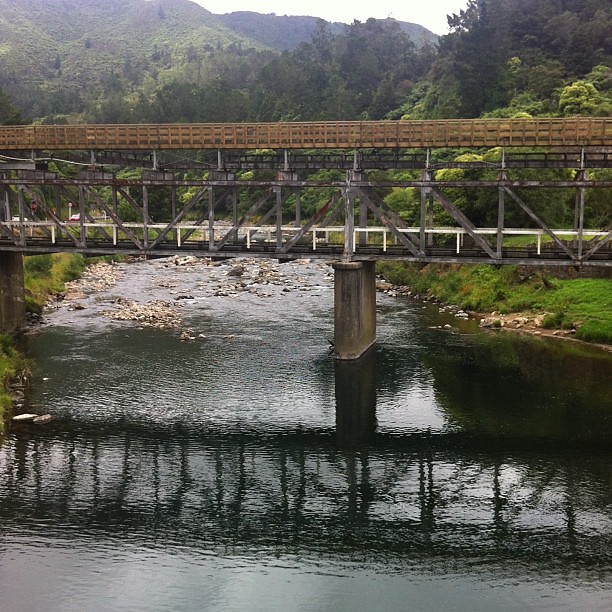
A new year and a new set of challenges. In the past few years I have been spoilt by sharing an office with a person who can reflect, discuss, inspire and challenge myself with on a daily basis. I've had the chance to work alongside them as a team member and in the classroom. I feel that in the last few years some strong pedagogical ideas and changes have happened in my teaching and in the way I learn. Many of these shifts have taken place by having a person who wants to challenge, change and examine the way the classroom looks on a daily basis.
Before this, my place of reflection - this blog was the place I came to, to reflect and think about my practice and ideas. To share my learning and pass on the process. It's amazing how a place of reflection - whether it be a person or a place - makes a difference to your pedagogy.
So my blog has sat at the side of the bridge - waiting for me, while I made new discoveries and changes in thought. The time has come to make my way back on to the bridge - a place that has helped me gain friends and colleagues from around NZ. The bridge that always takes me on the same familiar journey but also leads me to places of new surprises and sights.
I have loads to share and think about from the range of professional readings, tweets and conferences I have had the pleasure of attending. Over the last short while I have had attended educamps around NZ, uLearn in Auckland and the International Thinking Conference in Wellington. I have been able to take many things away from these conferences and also find a way to connect small ideas together that will make big changes in my understandings and teaching.
This year I also am taking on new challenges in my professional life - leading a team of talented teachers. Taking on leadership and working towards creating a shared environment where we, as a team, can work together to be a support network for each other is my aim. To become a strong professional learning house, sharing our pedagogy, triumphs and challenges. I have a lot to learn and am looking forward to the year ahead.
In my classroom I am continuing to develop my passion and interest for negotiated learning in the classroom. Students developing their self managing skills and autonomy in the classroom. Last year saw some strong developments for myself in the way that this could be structured in the class. Many of these changes came from reflections with the students about how they want their learning to look. This year it will change and develop further with the different learners and needs I have within my classroom. My passion for the integration of eLearning and mobile devices will continue with a strong basis in supporting the learning and learners in the classroom. Examining the way student voice can be shared to understand that my students can have an audience as big as the world.
So... welcome to the place where I begin my journey back across the bridge - to the familiar place with familiar places but also lots of new sights and people. I hope you will take part and have conversations with me in different places. Challenge my thinking/ideas and share your own!
Photo used under CC: Heymilly
Thursday, August 9, 2012
Numbers Game
League Tables... boiling students and schools down to 'comparable' numbers. Really? Is this what our world class New Zealand education is going to do to our kids? For our parents?
It boils our schooling down to a system that worries too much about numbers and not enough about the kids those numbers represent.
Just over a month prior to todays release you were saying National Standards data wouldn't be shared this year as it was "ropey" (NZ Herald, 3rd July). Then why, oh why would you share data today that you, yourself as the Minister of Education, still deems as "variable" (NZ Herald Article, 8th August). That's a pretty short attention span, dear Minister.
I get frustrated every time I hear Hekia Parata talk about 1 in 5 kids that are failing. But yet a student in my class who still needs support and has 'exhausted his timing' with a Resource Teacher, so he is no longer eligible for the support he needs. I could count on numerous hands the number of kids I've taught over 10 years where they are not 'low enough' to receive the additional support that they need or they have 'exhausted their hours of support' or are on waiting lists months long, that's if they are actually 'low enough' for me to submit the pages of paperwork to get them on the waiting list.
I have been lucky to work with one of the most amazing RT Lits I have encountered. Who has a heart of gold for the kids she works with and a talent at supporting kids to get them back on track. I know it frustrates her having to drop kids off and look at the long line of students waiting for her golden support. But none of this is being addressed. Why?
This opinion piece from the Manawatu Times entitled 'When Schoolings Not So Simple' caught my eye today. The author talks about some of the ownership coming not just solely on the schools but also onto the parents. Also about "politicians scoring points by messing with our schools". To me, this sums it up. I don't see a huge want from the government to make a difference to this famed 1 out of 5 children who are failing. If they did, they would be coming into our classrooms and asking us what we really need to help these kids succeed. But I see a group of people who have no real understanding of what is happening in our schools and what needs to be done. It's easy to blame teachers and schools for what is happening as a government can manage that. When will we see a government turn around to their voters and ask them to 'adult up' and become the parents we want for our New Zealand kids?
The fact is... schooling isn't that simple. It can't be boiled down to a set of numbers and nor should it. There are so many human factors that also influence our students achieving. Disabilities, families, relationships, prior school experience are just some factors that need to be considered. But they aren't being discussed. Paul Callister (Callister & Associates) dug deeper into the 'White Flight' debate that mainstream media took up a few months ago. They dug into the trends and analysed the actual data to come up with an entirely different view of what was happening with low decile schools. They talk about that fact that "there are significant inequalities in New Zealand society, including schooling. There are also major demographic, economic and social changes taking place in schools and wider society. The inequalities and changes need analysis and debate." There is no debate into these issues. The mainstream media picks it up when it's a slow news day and then we are lulled back into a false sense that's everything is ok. Because it's not on the nightly news. But teachers are just one of the groups who face this reality everyday while trying to make educational shifts for students.
The Government wants National Standards numbers so badly from all the schools yet brand spanking new charter schools won't have to comply to them. Start something 'new and exciting' that is going to "target those pupils who leave school without any qualifications..." (Hekia Parata, NZ Herald, 3rd August). You want public schools to focus on breaking this statistic through National Standards but yet charter schools don't need to be part of the National Standards comparisons. Interesting...
I am surrounded by the most amazing teachers in my school. Who support, encourage and deliver an amazing curriculum. We collaborate, co-operate and share resources and ideas without even thinking. In our school we have teachers who teach amazing drama and dance... we have an artist who fosters a passion for the Visual Arts in her students... we have gymnastic coaches who are patient and supportive in developing gymnasts and that's just to name a few. There are teachers who look for all the talents that a student brings to the classroom, not just as another number in their class.
Professor Thrupp from Waikato University spent 6 years investigating education markets and accountability in schools in Britain. He talks about how in schools "There becomes a national standards economy - a way of thinking where they narrow their teaching focus to just reaching those targets." (NZ Herald, League Tables for 'Sport', not schools). What's to stop this from happening? Nothing at the moment. Schools are scared of what National Standards mean for them. Not scared of sharing the data, but scared about what people's perception of this data means for their schools and their students.
What happens next? The data is collected and you have your below, at and above standards. What are you going to do next to help me support my students who are deemed below this standard line?
The Government has followed the National Standards path with determination
bullying and threats to close schools amongst some of them. How can you trust a Government who uses this as the way to get their education system to comply to something they so honestly see as disruptive and useless.
For example, the 208+ principals who signed the 'Open Letter to the Minister' this month declaring their mistrust in National Standards. How can you argue against such a strong group of educational leaders? I'm proud to say that my principal is represented amongst that list. I don't believe there are any benefits to our students from what is happening with the Government's tactics.
I choose to teach. I love teaching and I wouldn't be doing anything else. My day does not consist solely of Writing, Reading and Maths. I know these areas are important but what about innovation, creativity and problem solving? What about the other subjects I teach each week... term... year? Maori, Art, Written Language, Oral Language, Art, Drama, Dance, Spelling, Grammar, PE, Health, Life Skills... I could continue. Where is the acknowledgement in the array of skills that our teachers and schools are offering and fostering in our kiwi kids?
But all you want to know about... are the numbers.

It boils our schooling down to a system that worries too much about numbers and not enough about the kids those numbers represent.
Just over a month prior to todays release you were saying National Standards data wouldn't be shared this year as it was "ropey" (NZ Herald, 3rd July). Then why, oh why would you share data today that you, yourself as the Minister of Education, still deems as "variable" (NZ Herald Article, 8th August). That's a pretty short attention span, dear Minister.
I get frustrated every time I hear Hekia Parata talk about 1 in 5 kids that are failing. But yet a student in my class who still needs support and has 'exhausted his timing' with a Resource Teacher, so he is no longer eligible for the support he needs. I could count on numerous hands the number of kids I've taught over 10 years where they are not 'low enough' to receive the additional support that they need or they have 'exhausted their hours of support' or are on waiting lists months long, that's if they are actually 'low enough' for me to submit the pages of paperwork to get them on the waiting list.
I have been lucky to work with one of the most amazing RT Lits I have encountered. Who has a heart of gold for the kids she works with and a talent at supporting kids to get them back on track. I know it frustrates her having to drop kids off and look at the long line of students waiting for her golden support. But none of this is being addressed. Why?
This opinion piece from the Manawatu Times entitled 'When Schoolings Not So Simple' caught my eye today. The author talks about some of the ownership coming not just solely on the schools but also onto the parents. Also about "politicians scoring points by messing with our schools". To me, this sums it up. I don't see a huge want from the government to make a difference to this famed 1 out of 5 children who are failing. If they did, they would be coming into our classrooms and asking us what we really need to help these kids succeed. But I see a group of people who have no real understanding of what is happening in our schools and what needs to be done. It's easy to blame teachers and schools for what is happening as a government can manage that. When will we see a government turn around to their voters and ask them to 'adult up' and become the parents we want for our New Zealand kids?
The fact is... schooling isn't that simple. It can't be boiled down to a set of numbers and nor should it. There are so many human factors that also influence our students achieving. Disabilities, families, relationships, prior school experience are just some factors that need to be considered. But they aren't being discussed. Paul Callister (Callister & Associates) dug deeper into the 'White Flight' debate that mainstream media took up a few months ago. They dug into the trends and analysed the actual data to come up with an entirely different view of what was happening with low decile schools. They talk about that fact that "there are significant inequalities in New Zealand society, including schooling. There are also major demographic, economic and social changes taking place in schools and wider society. The inequalities and changes need analysis and debate." There is no debate into these issues. The mainstream media picks it up when it's a slow news day and then we are lulled back into a false sense that's everything is ok. Because it's not on the nightly news. But teachers are just one of the groups who face this reality everyday while trying to make educational shifts for students.
The Government wants National Standards numbers so badly from all the schools yet brand spanking new charter schools won't have to comply to them. Start something 'new and exciting' that is going to "target those pupils who leave school without any qualifications..." (Hekia Parata, NZ Herald, 3rd August). You want public schools to focus on breaking this statistic through National Standards but yet charter schools don't need to be part of the National Standards comparisons. Interesting...
I am surrounded by the most amazing teachers in my school. Who support, encourage and deliver an amazing curriculum. We collaborate, co-operate and share resources and ideas without even thinking. In our school we have teachers who teach amazing drama and dance... we have an artist who fosters a passion for the Visual Arts in her students... we have gymnastic coaches who are patient and supportive in developing gymnasts and that's just to name a few. There are teachers who look for all the talents that a student brings to the classroom, not just as another number in their class.
Professor Thrupp from Waikato University spent 6 years investigating education markets and accountability in schools in Britain. He talks about how in schools "There becomes a national standards economy - a way of thinking where they narrow their teaching focus to just reaching those targets." (NZ Herald, League Tables for 'Sport', not schools). What's to stop this from happening? Nothing at the moment. Schools are scared of what National Standards mean for them. Not scared of sharing the data, but scared about what people's perception of this data means for their schools and their students.
What happens next? The data is collected and you have your below, at and above standards. What are you going to do next to help me support my students who are deemed below this standard line?
The Government has followed the National Standards path with determination
For example, the 208+ principals who signed the 'Open Letter to the Minister' this month declaring their mistrust in National Standards. How can you argue against such a strong group of educational leaders? I'm proud to say that my principal is represented amongst that list. I don't believe there are any benefits to our students from what is happening with the Government's tactics.
I choose to teach. I love teaching and I wouldn't be doing anything else. My day does not consist solely of Writing, Reading and Maths. I know these areas are important but what about innovation, creativity and problem solving? What about the other subjects I teach each week... term... year? Maori, Art, Written Language, Oral Language, Art, Drama, Dance, Spelling, Grammar, PE, Health, Life Skills... I could continue. Where is the acknowledgement in the array of skills that our teachers and schools are offering and fostering in our kiwi kids?
But all you want to know about... are the numbers.

Image used under Creative Commons from: e y e / s e e
Wednesday, July 18, 2012
Independent Planner Reflection
We have a range of learning spaces in our class which provide the students with a chance to decide where they learn. Tall tables to keep an eye on the class, bean bags to slouch in, individual tables/spaces to work solo through to group tables that allow small to larger groups to work and learn together. It's been great to have the opportunity to watch students learn about what best works for them. Some subjects students prefer the hustle and bustle of group learning spaces and then other subjects they prefer to work on their own. If students know they have a lot of work to complete they often move themselves to the right space for them. It's been a great learning curve for myself and students.
Over the last term and a bit I have been working with my class of Year 5/6 students to plan their learning at the beginning of the day. Thus giving them a chance to decide when in the day their best learning happens.
A natural progression for the learners was to move into independent timetables. Though these are still a transition point. Everyday we discover a new way of doing these or small changes that help make this work. At the moment we plan on paper - day by day for the week to allow for changes each day. We have learnt to be increasingly flexible and work with what each day throws at us!
A few students plan on their iPod touch using the calendar feature and this works well for them. The planning at the start of the day allows the students to locate other students they would like to work with and to decide when their best learning happens and how. For some, this means getting the task they like the most completed first while for others it allows them to plan in more time for a task they know takes them a bit longer than what I would be able to allow them in a more structured setting.
Students work on a 'Must Do' and 'Can Do' system - where Must Do tasks are listed for their group - Maths, Reading and sometimes Writing. The 'Must Do' tasks MUST be completed by the end of the day and the 'Can Do' tasks allow for early finishers, other learning focuses or tasks that need to be completed. This means that at one time in the class students could be working on Xtramath, Brain Box sheets, reading to self, writing, completing reading tasks, filming, working with the teacher or any other variety of learning tasks.
At the start of the day the workshops are listed on the class planner. At the moment workshops are offered by groups moving soon in to needs as well. Each morning the student looks at the class planner to see what is on and when during the day will be independent planning time. They also need to check here to see when their teaching workshop is. They then check their group 'Must Do's' and 'Can Do's' and plan in their activities from here.
For some the planning of their learning came easily - it worked well for them. For other students they have required lots of checking in, reflection and conversations to help guide them on their way. It has required a lot of time and discussion as a class about what behaviours and attitudes we need to show and have to make it work in a respectful way for each other. It's a huge ask - but they are doing it and on asking my students what they would prefer.... hands down, independent planners are their choice.
One of the hardest things with the planners were students perception of time and time it would take to complete a task. Many would plan in unrealistic time frames - either too small or too big to complete tasks. This has been one of the hardest elements to develop in planning. We are moving towards more of a 'To Do List' type planning. Where the students list what they need to do and then add it to their planner when they have completed it. Knowing what they need to do and their timeframe could be a better way to plan the day for them. As adults this is generally the way we would go around planning our own learning - so it could be a more natural way of working through this. Especially for those students that find the time management harder to keep?
This has required a lot of big picture thinking combined with a lot of finer detail thinking and planning. The students enjoy it and it's great seeing learning conversations happen in the morning where students plan to meet up and complete tasks together - knowing that they work well in pairs or groups. There is still a long way to go but the changes and ideas that have formed from this have been great. I've been exceptionally lucky to share an office and a learning space with a very passionate teacher who is on a similar journey of independent learning with her students. We have had some amazing conversations about the challenges and the successes of this style of classroom. Without these conversations and a great thinker to learn alongside the process would have been more challenging. So, I'm very thankful for that opportunity.
Below I have attached links to free downloads for our planners that the students use. These have been refined and developed as we have gone along. They refinement and changes have come from the students. Some like the space to plan while other find knowing 20 minute blocks more manageable to plan within.
20 Minute Planner
Open Spaces Planner
Ten minutes before lunch we get together and reflect on our learning - plan in for the next day any learning that we haven't completed. The students can also plan with other students if they know they need some help or to work on something together.
We have a long way to go - but I'm proud of how far the students have come. I'm really happy with the journey we've made
Over the last term and a bit I have been working with my class of Year 5/6 students to plan their learning at the beginning of the day. Thus giving them a chance to decide when in the day their best learning happens.
A natural progression for the learners was to move into independent timetables. Though these are still a transition point. Everyday we discover a new way of doing these or small changes that help make this work. At the moment we plan on paper - day by day for the week to allow for changes each day. We have learnt to be increasingly flexible and work with what each day throws at us!
A few students plan on their iPod touch using the calendar feature and this works well for them. The planning at the start of the day allows the students to locate other students they would like to work with and to decide when their best learning happens and how. For some, this means getting the task they like the most completed first while for others it allows them to plan in more time for a task they know takes them a bit longer than what I would be able to allow them in a more structured setting.
Students work on a 'Must Do' and 'Can Do' system - where Must Do tasks are listed for their group - Maths, Reading and sometimes Writing. The 'Must Do' tasks MUST be completed by the end of the day and the 'Can Do' tasks allow for early finishers, other learning focuses or tasks that need to be completed. This means that at one time in the class students could be working on Xtramath, Brain Box sheets, reading to self, writing, completing reading tasks, filming, working with the teacher or any other variety of learning tasks.
At the start of the day the workshops are listed on the class planner. At the moment workshops are offered by groups moving soon in to needs as well. Each morning the student looks at the class planner to see what is on and when during the day will be independent planning time. They also need to check here to see when their teaching workshop is. They then check their group 'Must Do's' and 'Can Do's' and plan in their activities from here.
For some the planning of their learning came easily - it worked well for them. For other students they have required lots of checking in, reflection and conversations to help guide them on their way. It has required a lot of time and discussion as a class about what behaviours and attitudes we need to show and have to make it work in a respectful way for each other. It's a huge ask - but they are doing it and on asking my students what they would prefer.... hands down, independent planners are their choice.
One of the hardest things with the planners were students perception of time and time it would take to complete a task. Many would plan in unrealistic time frames - either too small or too big to complete tasks. This has been one of the hardest elements to develop in planning. We are moving towards more of a 'To Do List' type planning. Where the students list what they need to do and then add it to their planner when they have completed it. Knowing what they need to do and their timeframe could be a better way to plan the day for them. As adults this is generally the way we would go around planning our own learning - so it could be a more natural way of working through this. Especially for those students that find the time management harder to keep?
This has required a lot of big picture thinking combined with a lot of finer detail thinking and planning. The students enjoy it and it's great seeing learning conversations happen in the morning where students plan to meet up and complete tasks together - knowing that they work well in pairs or groups. There is still a long way to go but the changes and ideas that have formed from this have been great. I've been exceptionally lucky to share an office and a learning space with a very passionate teacher who is on a similar journey of independent learning with her students. We have had some amazing conversations about the challenges and the successes of this style of classroom. Without these conversations and a great thinker to learn alongside the process would have been more challenging. So, I'm very thankful for that opportunity.
Below I have attached links to free downloads for our planners that the students use. These have been refined and developed as we have gone along. They refinement and changes have come from the students. Some like the space to plan while other find knowing 20 minute blocks more manageable to plan within.
20 Minute Planner
Open Spaces Planner
Ten minutes before lunch we get together and reflect on our learning - plan in for the next day any learning that we haven't completed. The students can also plan with other students if they know they need some help or to work on something together.
We have a long way to go - but I'm proud of how far the students have come. I'm really happy with the journey we've made
Sunday, February 5, 2012
Reading Interview
This year I am teaching a Year 5/6 class which I am extremely excited about! We have had 4 days together so far and I am amazed at the conversations, ideas and thoughts that have come out of our lessons. We definitely hit the ground running.
One of the things I asked them to do for me last week was to complete a Reading Interview form. This was so I could begin to piece together my readers as individuals but also as a class. The idea came through via another post on my pinterest board and unfortunately I can't find the link back to it, but I shall update this once I find it!
I asked the kids to complete it while I read out each question and explained a bit more - if kids felt confident with the task they were to continue on with the questions by themselves. This was a great way to structure it as my more confident students continued onwards without having to wait for others.
On reading the completed interviews I have learnt so many valuable things about my students as readers already:
This is just the start of a wealth of interesting and informative information that allows me to build up a picture of my readers.

One of the things I asked them to do for me last week was to complete a Reading Interview form. This was so I could begin to piece together my readers as individuals but also as a class. The idea came through via another post on my pinterest board and unfortunately I can't find the link back to it, but I shall update this once I find it!
I asked the kids to complete it while I read out each question and explained a bit more - if kids felt confident with the task they were to continue on with the questions by themselves. This was a great way to structure it as my more confident students continued onwards without having to wait for others.
On reading the completed interviews I have learnt so many valuable things about my students as readers already:
- I have a large chunk of boys who love car books!
- The majority of my class are in to comedy books
- A lot of them do not like to read poetry
- The like to read outside in the shade or inside where it is quiet
- I have quite a few that don't read in their spare time
- Most are worried about reading aloud due to what they think people will say/do or think about their reading
This is just the start of a wealth of interesting and informative information that allows me to build up a picture of my readers.
I can use this information to inform how I approach their independent choices as part of reading time. I'm going to need to do a lot of work in a range of genres this year to expand my students knowledge outside of their favourite genre.
I think I also really need to take on the outside world during silent reading and head out onto the field or under the trees or in our pod area for a few sessions during the week!
Here is a link to the Reading Interview and you are welcome to use it!
Saturday, January 7, 2012
Educating Boys
 Around 6 months ago a friend recommended a book called 'Educating Boys' by Michael Irwin to me. I started it and then, like most books in term time, it got put to the side. Even thought I've been desperate to read it! These holidays have meant that I have picked it up again and continued to read it. It's a worthwhile read for anyone who are working with boys in education or who have boys at home.
 Not a lot of the ideas and concepts are all that new to me e.g. boys need more movement, action learning and hands on approaches. But so far it has reinforced a lot of key teaching and learning concepts and approaches as well as ones that I have changed or don't use as much as I have previously.
A concept I linked into with learning is the idea of 'Play' as a basis for learning. A place to hook old learning into new learning and to make discoveries. Last year as part of our Daily5 reading work the students did 'Work with Words' which is basically spelling/grammar work. As part of this I gave my year 4 students purple sand to draw words into and wikki stix to make letters with, amongst other tasks. Initially I thought perhaps they wouldn't use them as they might deem them as 'babyish'. Interestingly enough these were the items that were first taken by the students working in this area over and over again. There was also a student developed system for letting people know you wanted to use them next. Both of these were play items and I will use them with my Year 5/6 students this year again! I also really liked the idea of having 'explorer' areas where there are things for the students (not just the boys!) to create or dismantle. But also it's made me think about how I can create more areas for play in curriculum areas to diversify the teaching and learning process.
Exercise and Physical Education as a catalyst for more focussed work. I know this and do a lot of this already as I see a huge difference in the students when there is more activity in the day. But it's made me interested to look at starting each day or the breaking the middle block with a burst of focussed physical activity. I've done this previously with 'Brain Breaks' and it's made a huge difference but it was something this year that I didn't use.
Also how I'm teaching Physical Education and the importance of making time for it. Our school is well set up with our syndicates taking part in syndicate wide sports each term for at least 1 hour and also whole school Jump Jam each week. This is a great base for our students and I know that my boys are always the first ones to be asking what sports they will be undertaking during this time and the first to complain if the weather is bad on sports afternoons!
It was interesting to read about the students who are coming into schools and the importance of teaching them to read and write from the first day and as early as 5. Irwin talks about the fact that a lot of the teaching and learning for literacy has moved away from play based, making and creating into more 'talk and write' examples. He stresses the importance of linking back to the play concepts and developmental play in the early years. There has been a lot of talk about the Finish education system lately and how they excel with teaching and learning in worldwide comparisons. Irwin interestingly points out the fact that students don't start school in Finland until they are 7 giving students more time to be involved in play. Such a focus on literacy which in turn pushes out areas such as The Arts, Physical Education and Science out of the daily curriculum. All areas that boys tend to excel in but don't get the opportunity to be as involved in.
So, I will continue to read, reflect and make links to my teaching practice and challenge ideas I have or have had and why I may not do them anymore. I think it is a worthwhile read and while the focus is on educating boys, I do believe many of the concepts and ideas can equally be forwarded to girls and their learning needs.
Sunday, October 9, 2011
Goodbye Delicious - Hello Symbaloo!
With the change over of delicious and all the problems that have gone alongside it, it has seen me seek out new ways to share and display learning links for my students. With the change over the kids were quick to point out that tags were missing and it was hard to find links that they knew where to find previously.
So this sent me on hours (yes, hours) long search to find something that would allow me to create several pages but also allow the students to have visuals of the links they are wanting to use. I really wanted to switch to a more visual form of bookmarking rather than word tags after myself enjoying Pinterest - a visual bookmarking tool due to the ease of use and visual way of organising links.
I had a play around with the delicious stacks - which at first seemed very promising. Apart from when I kept getting 500 gateway errors from them. When stacks did work it would only allow me to stack together my first page of links but not access the other pages. Fiddly and unfun. So, I gave up. I moved on to trialling websites like favoritus, portaportal, sitemarks and more - all visual bookmarking sites that looked extremely good. All of them had the same problem for me. The lack in ability to be able to create a standalone web page that had seperate pages for my links. Painful.
Then I remembered a site that I had previously played with and put into my 'could be helpful' pile of links. Symbaloo. It's a simple idea - you create webmixes or pages of links. Each link is a little coloured icon that you can arrange across your webmix. The webmix can be shared via email, kept private, shared with the world or embedded into webpages. So this is the angle I have taken. I am creating seperate pages for each subject and colour coding links with visuals also. The students used it in the last 2 days of term and the votes were pretty clear - all but 4 students loved the new Symbaloo system because of the colours, images and how easy it was to find links. The 4 students who didn't like it said that it was because they were used to delicious. Though 1 student did say he might like Symbaloo more once 'he got used to it' - awesome!

So this sent me on hours (yes, hours) long search to find something that would allow me to create several pages but also allow the students to have visuals of the links they are wanting to use. I really wanted to switch to a more visual form of bookmarking rather than word tags after myself enjoying Pinterest - a visual bookmarking tool due to the ease of use and visual way of organising links.
I had a play around with the delicious stacks - which at first seemed very promising. Apart from when I kept getting 500 gateway errors from them. When stacks did work it would only allow me to stack together my first page of links but not access the other pages. Fiddly and unfun. So, I gave up. I moved on to trialling websites like favoritus, portaportal, sitemarks and more - all visual bookmarking sites that looked extremely good. All of them had the same problem for me. The lack in ability to be able to create a standalone web page that had seperate pages for my links. Painful.
Then I remembered a site that I had previously played with and put into my 'could be helpful' pile of links. Symbaloo. It's a simple idea - you create webmixes or pages of links. Each link is a little coloured icon that you can arrange across your webmix. The webmix can be shared via email, kept private, shared with the world or embedded into webpages. So this is the angle I have taken. I am creating seperate pages for each subject and colour coding links with visuals also. The students used it in the last 2 days of term and the votes were pretty clear - all but 4 students loved the new Symbaloo system because of the colours, images and how easy it was to find links. The 4 students who didn't like it said that it was because they were used to delicious. Though 1 student did say he might like Symbaloo more once 'he got used to it' - awesome!

The image from above is from my Daily 5 wiki for the students. This is one area I have created Symbaloo link pages and it has now become the portal that they will use for links. They can either go straight to the page or jump to it via the class blog. You can view the website here.
The colour coding system is quite handy also. I have a student who is new to my class from overseas and has minimal english. The links in orange are specifically set up for her - the students were great at showing her that they were for her and the second time on the computer she seemed to understand that this was a great area for her to start.
The other thing about Symbaloo that was a bonus is that the interface works on iPads and iPod touches. One of my students became a fantastic tester and tried it out. Unfortunately only 2 of the above links would run on an iPod - this has meant that I've created other Symbaloo's that will contain mobile device friendly links!
The biggest drawback is the time that this takes compared to setting up links in delicious - with the delicious bookmarking paglets it is extremely easy to link and tag websites. While Symbaloo isn't as easy to tag websites at the moment the visual elements and arrangements for the students makes it far outweigh the time it takes me to add links in!
Friday, June 3, 2011

Wednesday, June 1, 2011
EduCamp Welly
EduCamp Welly was an amazing experience and well worth the flight to Wellington (not that I ever need an excuse to go to Wellington!) It's not just about the learning that goes on but also about the connections that you make. EduCamps continue to provide a range of experiences and teachers where the conversations can be dynamic and broad.

From the smackdown at the beginning through to the end there were many people to listen to and conversations to be had. The first session that I attended was looking at cloud computing and how different schools/classes/teachers are using the cloud to base their ever increasing digital lives. The conversations in this session involved sharing each of our experiences of what we are doing. For some it mean being consoled as the changes they wanted to make couldn't be undertaken. I guess what I find baffling about this is that 1 person can ultimately change the outlook for an entire school because of what they don't understand.
The second session saw me sharing some resources with a new teacher who has a class with 5 Interactive Whiteboards.... yes 5! Teachers struggle to get their head around utilising one IWB in a fashion past a glorified overhead projector, let alone 5 of them. But it sounds like he is making an awesome start in his journey and what better place to start that heading along to an EduCamp!
While this conversation was happening Tim was running a session on Scratch with one of his students SkyGecko. I'd heard about Scratch at a previous conference and had a go at it, didn't 'get it' and left it. After EduCamp this was the first thing I downloaded and attacked. I am now a full blown Scratch enthusiast! Scratch is simple programming software that allows kids to make animations and games. The layout is easy to use and once you get used to commands, scripts and sprites the opportunities are endless! This week we had a PINs session (more about this later) where I worked with a group of kids to create a game - kids that weren't even in the session want to use Scratch after seeing the games!
All in all it was a fabulous day - great to catch up with the tribe of EduCamp followers from Hamilton and with the ever wonderful Allanahk. There are several more EduCamps to come in 2011 including a new one in Dunedin! So check them out and head along. Don't fret if you're by yourself - there's always a smile and a group of awesome educators there to meet you!
Photo by Fiona Grant from Flickr
Saturday, May 7, 2011
Teaching Mojo
Mojo
Noun.
1. A person's style
2. power; charisma. : She seemed to radiate a penetrating mojo that made her easy to deal with
3. Self-confidence, Self-assuredness. As in basis for belief in ones self in a situation. Esp. I context of contest or display of skill such as going into battle.
Teaching Mojo - the stuff that makes you radiate in the classroom. Makes you settle into a new day and say 'bring it on' - where does it come from and where does it go?
Once it's gone... how do you get it back?
The last term I felt somewhat flat - things weren't happening like I wanted them too. They weren't bad, but it really didn't have that magical feeling of being an amazing teacher. This term, 1 week in, and our class and I feel somewhat magical. The kids are enthusiastic, keen and taking their learning outside the classroom doors. They are researching, questioning and bringing their parents into their learning. But I'm also enthused, excited and at the end of the day thinking forward to what next?, what about? and how about? It's amazing how much your teaching mojo influences the whole atmosphere of the class. The teaching mojo is back.
We know that our attitude and enthusiasm affects the classroom.
It's not rocket science really. But crucial to remember.
Think back to a bad day that you had in the classroom.
Think about what your class was like and what it felt like.
Now think about a great day.
Think about the atmosphere that radiates through your class - what made it such a great day?
I remember having Tony Ryan work with us at the beginning of the year and talking about keeping a check on our work/life balance as a teacher. If that is out of kilter it's easy to loose yourself. Funnily enough at the time - I thought, 'yes, that's me and I'm going to change that this year' - kick in term time and how easily we forget the goals we set ourselves! It reminds me of a post from Tony's blog I really loved reading. 'The First 5 Minutes' - the idea that the perception of everything is formed in the first 5 minutes - your day, your attitude, students attitude to the day, the lesson, the learning.
For the first holidays ever I did a minimal amount of work - thanks to being sick. This was somewhat a blessing in disguise. 2 weeks away from work but still having time to reflect/think meant some great changes were made. I could recharge, re-form and re-assess what was happening in my classroom, but most importantly what was happening for me. I guess I needed to time to get the balance back.
Sometime we need to reassess that all to important work-life balance that we easily forget about.
So, I guess the question is - what do you do when you've lost you're teaching mojo?
 Balance used under Creative Commons from Darkr on Flickr
Noun.
1. A person's style
2. power; charisma. : She seemed to radiate a penetrating mojo that made her easy to deal with
3. Self-confidence, Self-assuredness. As in basis for belief in ones self in a situation. Esp. I context of contest or display of skill such as going into battle.
Teaching Mojo - the stuff that makes you radiate in the classroom. Makes you settle into a new day and say 'bring it on' - where does it come from and where does it go?
Once it's gone... how do you get it back?
The last term I felt somewhat flat - things weren't happening like I wanted them too. They weren't bad, but it really didn't have that magical feeling of being an amazing teacher. This term, 1 week in, and our class and I feel somewhat magical. The kids are enthusiastic, keen and taking their learning outside the classroom doors. They are researching, questioning and bringing their parents into their learning. But I'm also enthused, excited and at the end of the day thinking forward to what next?, what about? and how about? It's amazing how much your teaching mojo influences the whole atmosphere of the class. The teaching mojo is back.
We know that our attitude and enthusiasm affects the classroom.
It's not rocket science really. But crucial to remember.
Think back to a bad day that you had in the classroom.
Think about what your class was like and what it felt like.
Now think about a great day.
Think about the atmosphere that radiates through your class - what made it such a great day?
I remember having Tony Ryan work with us at the beginning of the year and talking about keeping a check on our work/life balance as a teacher. If that is out of kilter it's easy to loose yourself. Funnily enough at the time - I thought, 'yes, that's me and I'm going to change that this year' - kick in term time and how easily we forget the goals we set ourselves! It reminds me of a post from Tony's blog I really loved reading. 'The First 5 Minutes' - the idea that the perception of everything is formed in the first 5 minutes - your day, your attitude, students attitude to the day, the lesson, the learning.
For the first holidays ever I did a minimal amount of work - thanks to being sick. This was somewhat a blessing in disguise. 2 weeks away from work but still having time to reflect/think meant some great changes were made. I could recharge, re-form and re-assess what was happening in my classroom, but most importantly what was happening for me. I guess I needed to time to get the balance back.
Sometime we need to reassess that all to important work-life balance that we easily forget about.
So, I guess the question is - what do you do when you've lost you're teaching mojo?
Balance used under Creative Commons from Darkr on Flickr
Monday, March 21, 2011
Dropbox for iPad
In today's iPad session during Reading the students used a number of really simple & effective apps to create character webs (more on this in another post). It all went fantastically but when we came to the end of the lesson there was the small problem of 'what now?' with the students work. My original plan of using the 'whiteboard' app to bluetooth them across to the master iPad didn't pan out like I wanted it to (more work on that one needed). So it was back to the drawing board slightly!
There was an app that I had placed on the iPads but not tried, which was 'Dropbox for iPad'. If you haven't used Dropbox before it's a really simple but handy service that allows you to drop a file into a folder on your computer. Then it will sync up to your Dropbox account via the internet and enable you or a person you share it to, to have access to the file by downloading or viewing. This works for images, videos and documents.
Towards the end of the lesson as students started to finish I realised the next step was missing. Another thought was for the students to log in to the class blog and upload them via there - but we were running out of time.
So... I've set up a class Dropbox account - very easy to do and between set up and setting up individual folders I would say it took around 5-10 minutes to create them. The layout of the web Dropbox is incredibly plain and simple which makes it easy to navigate and learn to use.
Web based Dropbox layout:

The fantastic thing is that once images were uploaded from the iPad into the Dropbox account it was an instant refresh on my computer and there were my files.
Here is a snapshot from the Dropbox iPad app:
It shows all the students files and uploading into a file is as quick as clicking 1 button, finding the image and then it automatically uploads to your folder.

Once inside a folder you can view the image/file within the Dropbox app also:

So this will be the next step in our next session - being able to go back and save the content we created and upload it to our Dropbox account so that we can use it elsewhere. The only negative I've found so far is that it remembers your password - which is fantastic if you are a single user iPad. But each time the students will need to go through a couple of steps to log out of their Dropbox account - not too hard but not a simple click either!
More to come once I've trialled this in class further!
There was an app that I had placed on the iPads but not tried, which was 'Dropbox for iPad'. If you haven't used Dropbox before it's a really simple but handy service that allows you to drop a file into a folder on your computer. Then it will sync up to your Dropbox account via the internet and enable you or a person you share it to, to have access to the file by downloading or viewing. This works for images, videos and documents.
Towards the end of the lesson as students started to finish I realised the next step was missing. Another thought was for the students to log in to the class blog and upload them via there - but we were running out of time.
So... I've set up a class Dropbox account - very easy to do and between set up and setting up individual folders I would say it took around 5-10 minutes to create them. The layout of the web Dropbox is incredibly plain and simple which makes it easy to navigate and learn to use.
Web based Dropbox layout:

The fantastic thing is that once images were uploaded from the iPad into the Dropbox account it was an instant refresh on my computer and there were my files.
Here is a snapshot from the Dropbox iPad app:
It shows all the students files and uploading into a file is as quick as clicking 1 button, finding the image and then it automatically uploads to your folder.

Once inside a folder you can view the image/file within the Dropbox app also:

So this will be the next step in our next session - being able to go back and save the content we created and upload it to our Dropbox account so that we can use it elsewhere. The only negative I've found so far is that it remembers your password - which is fantastic if you are a single user iPad. But each time the students will need to go through a couple of steps to log out of their Dropbox account - not too hard but not a simple click either!
More to come once I've trialled this in class further!
Monday, February 21, 2011
Delicious In The Class Update
As per a previous post here I discussed the use of the social bookmarking site Delicious. Once again in 2011 I am continuing to utilise Delicious as a way of storing class bookmarks for students to use at school and at home. Over the first few weeks the students seem to be able to easily navigate the site and find where their favourite sites are. Just a few tips to get you going if you are planning to use delicious for your class!
Tips:
* Think carefully about the tags for your websites... it's easy to get caught up in bookmarking amazing sites and end up with plenty of different tags.
* When deciding on tags think about if you want tags organised by your reading/maths groups (e.g. the 'Dazzling Dividers' group) or by levels (e.g. 'Stage 5 strategies') etc.
* Try to keep tags together by using a headline tag e.g. Writing_online or Writing_organisers This allows the students to look for the subject and then what they need. As delicious organises tags down the side by Top 10 and also All Tags - it allows them to search alphabetically for the subject they need.

* You can add information to each link that you post e.g. what you can do there or tasks that you have set for them to complete on the page. I find that not every link needs to have this added - the students are quick to know what their favourite links are named.
* Add your delicious page to your class wiki or blog.
* Send home a notice promoting your delicious account as parents are keen to have links to some great websites that children can use at home.
* Set up a whiteboard in class or a place on your class blog for students to add their favourite sites too. Students are more than able to login and add their own sites - but teach the concept of tagging carefully so you don't end up with random tags to re-organise!
* Link up with other classes via delicious, so you can make the most of the social aspect of delicious. This is my next step for 2011 with Delicious - so if you have a class delicious account add it to the comment section so we can link up!
Tips:
* Think carefully about the tags for your websites... it's easy to get caught up in bookmarking amazing sites and end up with plenty of different tags.
* When deciding on tags think about if you want tags organised by your reading/maths groups (e.g. the 'Dazzling Dividers' group) or by levels (e.g. 'Stage 5 strategies') etc.
* Try to keep tags together by using a headline tag e.g. Writing_online or Writing_organisers This allows the students to look for the subject and then what they need. As delicious organises tags down the side by Top 10 and also All Tags - it allows them to search alphabetically for the subject they need.

* You can add information to each link that you post e.g. what you can do there or tasks that you have set for them to complete on the page. I find that not every link needs to have this added - the students are quick to know what their favourite links are named.
* Add your delicious page to your class wiki or blog.
* Send home a notice promoting your delicious account as parents are keen to have links to some great websites that children can use at home.
* Set up a whiteboard in class or a place on your class blog for students to add their favourite sites too. Students are more than able to login and add their own sites - but teach the concept of tagging carefully so you don't end up with random tags to re-organise!
* Link up with other classes via delicious, so you can make the most of the social aspect of delicious. This is my next step for 2011 with Delicious - so if you have a class delicious account add it to the comment section so we can link up!
Thursday, December 9, 2010
Welcome Back
 It's been a long time since I've posted and it's not as if there's been nothing going on. Plenty has been happening. Sometimes when these things happen, other things get put to the back burner and don't happen like you want them too.
Either way, blogging is very important to me. It has allowed me to change and reflect on my practice while having amazing feedback and ideas from the people in my P.L.N. (that's you, by the way!)
It's amazing how one conversation can change your motivation in the most positive of ways. So it's back to it... there are lots of things to share and say and I will be endeavoring to share these in the next few posts.
I look forward to it!
Photo: HeyMilly - Yes one of the things I've been up to!
Subscribe to:
Posts (Atom)