Key Competencies for the Future was release mid 2014 and explores the history, idealogy and understandings of New Zealand's Key Competencies. The authors; Rosemary Hipkins, Rachel Bolstad, Sally Boyd and Sue McDowall look at the Key Competencies from many angles and examine the important place that they have within our curriculum.
Right from the start of this book there were key elements and statements that stood out to me that really highlighted the importance of the Competencies for teachers. Particularly of interest was the concept of how even though the Competencies stand alone, they have to stand together. You cannot also look at them in isolation and piecing the picture together of how they fit and work together in the wider world is key to us as educators supporting our students with them.
"Key Competencies are actually cross-cutting of each other. We pull them apart to understand their individual character, but it's also important to stitch them back together when we put them to work in real contexts" - KCFTF (Key Competencies for the Future) Pg 16
I've really enjoyed following the VLN thread and webinar that happened as part of the Connected Educator Month - you can watch the webinar with 3 of the authors here. It's worth the watch and listen, even if you aren't currently reading the book.
There are such a wide range of concepts that stood out to me personally and for my practice and I particularly enjoyed the thinking around 'wicked problems'.
Wicked Problems: the idea of students being involved in real future focused problems that have relevancy and impact for their world. Concepts such as food security, sustainability, pollution and more. These are large scale problems that are difficult or impossible for people to solve due to a number of reasons, such as perspectives, scale etc. Read more on Wicked Problems here. Through this I was questioning how really future focussed our practice and selection of negotiated learning avenues have really been? Are they big enough with far reaching consequences that surpass the students' time in school. At uLearn I have had the opportunity to attend workshops run by Tom Barrett of NoTosh - in these workshops I have begun to explore Design Thinking further. Many comments and conversations with my colleagues during this workshop filtered back to themes and ideas from the Key Competencies for the Future book. Particularly around Wicked Problems, provocations and the design thinking journey.
Showing posts with label key competencies. Show all posts
Showing posts with label key competencies. Show all posts
Wednesday, July 29, 2015

Sunday, August 31, 2014
Term 3 Reflection - PML
PML (Planning My Learning) has changed a little bit - we have made changes to the structure of the board and moved it off the whiteboard. It just was time for it to change. I was finding the students were becoming more and more focussed on quantity rather than quality - it was about how many ticks were up on the board rather than the quality and time spent. So, armed with information from a conversation with the students, we made 2 changes to the PML system (in my head I have 100 - but we have to start somewhere!)
1. Quality Reflective Buddies - when we spoke about the problem of 'quality vs quantity' the students agreed - they were focussed on 'getting through' the list rather than pushing the boundaries of their learning. It was a great conversation and gave me insights in lots of ways. The students came up with 2 main solutions:
- Go back to the old way of working in blocks and everyone doing the same thing at the same time
- Have a person to meet with to share if your work is quality or not
Interestingly, the first idea came from a student who I know finds the challenge of planning his day more difficult, but when this was put to the class it was overwhelmingly challenged out (26-2). I'll be talking more with those 2 students to see how I can support them in developing their learning priorities.
The second idea is the one we have gone with - QLP or Quality Learning Partners. We had lots of discussion around how this could work. In the end I suggested stopping 15 minutes prior to the end of the day, so you could meet with your buddy and discuss your work, feed back, next steps etc. This is where we have started. The students then had the option to choose their own partner or to have some support from me to choose one. We had to discuss being able to be supported and open and honest with the person you choose. If you felt like you couldn't say 'hey, you need to go back and work on... to make this better' they probably weren't the person to be your QLP.
2. Leaving the Whiteboard - previously PML has been completed on the whiteboard. The students know I personally disliked this system, I shared this with them and the why I disliked it. But, I am not the one who has to work from it - so we carried on with it. As the term has progressed I have heard snippets of conversations as students tick off their work schedule for the day and these conversations led me to setting up a new full wall with the system on it. When introduced to the students I shared with them conversations and things that I had changed because of what I had heard. That it was these things that made the decision to make the change - I then asked if they would like to use it and the kids were keen! (Phew - there were a lot of lines to stick up and staple!) However, I knew many of my kids would need to see it before they would understand it.
.JPG) One of my students then asked the question I had been waiting for - "how will we tick to say we have worked on it?" "Great question" I replied... "How will we?" This led to 6 students taking on the construction of a system that we could use on the PML wall to show a range of learning happening. The last step was to share these with the rest of the class and then the students decided on voting for their favourite symbols that we will use.
One of my students then asked the question I had been waiting for - "how will we tick to say we have worked on it?" "Great question" I replied... "How will we?" This led to 6 students taking on the construction of a system that we could use on the PML wall to show a range of learning happening. The last step was to share these with the rest of the class and then the students decided on voting for their favourite symbols that we will use.
It was great to see a range of ideas being put forward that showed students were really keen to push quality over quantity with the refined system.
Writing has continued to develop based on need and interested rather than a genre. This week we were responding to a trip that we had to the Maritime Museum last week. We chose Newspaper Reports, Letters or a Recount. The students then signed up to the genre that they needed or wanted to write on. 3 different workshops then ran throughout the week and I continue to find the kids more engaged in their writing in this way.
There are a few challenges I need to work on...
1. Tracking the genres they choose. I'm thinking I will create a genres checklist that they can tick when they have completed a finished piece of writing in that genre. It will help them know more about the genres and what is out there also.
2. Creating/Finding/Sourcing/Using realistic, hands on and real life writing experiences that will foster the interest and passion of writing. Also fitting these into the daily life of a classroom. I have had a great conversation with the Year 2 teacher next door talking about how we may be able to both use this as a benefit to both our kids with their writing. More to reflect and think about here.
There are so many ideas, challenges and thoughts currently roaming around in my head that 'where to start' is often a daily challenge for me at the moment. My students have come a long way in concepts of knowing more about them as learners, having a voice within the classroom and making steps to be independent within their learning. But there is so much more that I want to challenge them and myself on.
My office buddy and I have great conversations on a daily basis - reflecting on our day, our learners, our teaching and our classrooms and I feel like those conversations help to clarify decisions that are made. I'm very lucky that we have younger students next door that provide a challenge and a platform for my students to be role models and teachers to them. At the moment we are continuing to explore how we can develop our space for our students further. This week we are beginning the younger students in planning and teaching workshops for the Year 2 and Year 5/6 students. I am looking forward to seeing how these develop over the rest of the term.
Each day I struggle more and more with the constraints of what traditional education. We can voice that we want ownership, student voice, self management, self-direction - but how does that actually work in the everyday education world with tests, assessments and standards? It's a big question. I'm ridiculously lucky in where I teach - I am trusted as a professional to make professional choices that best work because of my teaching knowledge, knowledge of my students and their learning.
There is so much that works about PML and the structure of my class but I know that it is not the end point of what I want the concept of school and learning to look and be like for my students. This week the first of my students for the year got underway with DRIVE Time projects - which are personal learning tasks driven by their passions/needs. There are lots of readings and thinking behind the way this is structured and was developed with a group of kids last year, based on these thoughts. DRIVE is about students owning their learning and making those decisions. At the heart is what learning actually is, our school values and school negotiated learning values as a teacher point hinge. This is the big point of where I would like to get to with my students across a more full time range. We (my students and I) are getting there... slowly... with careful thought and reflection... in time.
1. Quality Reflective Buddies - when we spoke about the problem of 'quality vs quantity' the students agreed - they were focussed on 'getting through' the list rather than pushing the boundaries of their learning. It was a great conversation and gave me insights in lots of ways. The students came up with 2 main solutions:
- Go back to the old way of working in blocks and everyone doing the same thing at the same time
- Have a person to meet with to share if your work is quality or not
Interestingly, the first idea came from a student who I know finds the challenge of planning his day more difficult, but when this was put to the class it was overwhelmingly challenged out (26-2). I'll be talking more with those 2 students to see how I can support them in developing their learning priorities.
The second idea is the one we have gone with - QLP or Quality Learning Partners. We had lots of discussion around how this could work. In the end I suggested stopping 15 minutes prior to the end of the day, so you could meet with your buddy and discuss your work, feed back, next steps etc. This is where we have started. The students then had the option to choose their own partner or to have some support from me to choose one. We had to discuss being able to be supported and open and honest with the person you choose. If you felt like you couldn't say 'hey, you need to go back and work on... to make this better' they probably weren't the person to be your QLP.
2. Leaving the Whiteboard - previously PML has been completed on the whiteboard. The students know I personally disliked this system, I shared this with them and the why I disliked it. But, I am not the one who has to work from it - so we carried on with it. As the term has progressed I have heard snippets of conversations as students tick off their work schedule for the day and these conversations led me to setting up a new full wall with the system on it. When introduced to the students I shared with them conversations and things that I had changed because of what I had heard. That it was these things that made the decision to make the change - I then asked if they would like to use it and the kids were keen! (Phew - there were a lot of lines to stick up and staple!) However, I knew many of my kids would need to see it before they would understand it.
One of my students then asked the question I had been waiting for - "how will we tick to say we have worked on it?" "Great question" I replied... "How will we?" This led to 6 students taking on the construction of a system that we could use on the PML wall to show a range of learning happening. The last step was to share these with the rest of the class and then the students decided on voting for their favourite symbols that we will use.It was great to see a range of ideas being put forward that showed students were really keen to push quality over quantity with the refined system.
Writing has continued to develop based on need and interested rather than a genre. This week we were responding to a trip that we had to the Maritime Museum last week. We chose Newspaper Reports, Letters or a Recount. The students then signed up to the genre that they needed or wanted to write on. 3 different workshops then ran throughout the week and I continue to find the kids more engaged in their writing in this way.
There are a few challenges I need to work on...
1. Tracking the genres they choose. I'm thinking I will create a genres checklist that they can tick when they have completed a finished piece of writing in that genre. It will help them know more about the genres and what is out there also.
2. Creating/Finding/Sourcing/Using realistic, hands on and real life writing experiences that will foster the interest and passion of writing. Also fitting these into the daily life of a classroom. I have had a great conversation with the Year 2 teacher next door talking about how we may be able to both use this as a benefit to both our kids with their writing. More to reflect and think about here.
There are so many ideas, challenges and thoughts currently roaming around in my head that 'where to start' is often a daily challenge for me at the moment. My students have come a long way in concepts of knowing more about them as learners, having a voice within the classroom and making steps to be independent within their learning. But there is so much more that I want to challenge them and myself on.
My office buddy and I have great conversations on a daily basis - reflecting on our day, our learners, our teaching and our classrooms and I feel like those conversations help to clarify decisions that are made. I'm very lucky that we have younger students next door that provide a challenge and a platform for my students to be role models and teachers to them. At the moment we are continuing to explore how we can develop our space for our students further. This week we are beginning the younger students in planning and teaching workshops for the Year 2 and Year 5/6 students. I am looking forward to seeing how these develop over the rest of the term.
Each day I struggle more and more with the constraints of what traditional education. We can voice that we want ownership, student voice, self management, self-direction - but how does that actually work in the everyday education world with tests, assessments and standards? It's a big question. I'm ridiculously lucky in where I teach - I am trusted as a professional to make professional choices that best work because of my teaching knowledge, knowledge of my students and their learning.
There is so much that works about PML and the structure of my class but I know that it is not the end point of what I want the concept of school and learning to look and be like for my students. This week the first of my students for the year got underway with DRIVE Time projects - which are personal learning tasks driven by their passions/needs. There are lots of readings and thinking behind the way this is structured and was developed with a group of kids last year, based on these thoughts. DRIVE is about students owning their learning and making those decisions. At the heart is what learning actually is, our school values and school negotiated learning values as a teacher point hinge. This is the big point of where I would like to get to with my students across a more full time range. We (my students and I) are getting there... slowly... with careful thought and reflection... in time.
Saturday, May 31, 2014
Immersion Week
Our big theme this term is 'Dream It, Think It, Do It!' so KW and I designed a week of immersion which allowed our students to be involved in a range of ideas and topics to allow us to negotiate the learning path with our students. In our school we work in pods - this year my pod of 4 classroom consists of 2 Year 2 classes, 1 Year 1 class and my own year 5/6 class. KW and I planned a range of learning opportunities and also within our immersion week we held 4 sessions where each teacher from our pod took a different immersion session where we split our students up within the 4 groups. Within this pod time we saw students take on game making, drama, modifying sports and hat creation challenges that saw them working within different aspects of creativity.
For the rest of the week KW and I planned immersion learning opportunities for our Year 2 and Year 5/6 students to be working alongside each other. Each activity was carefully planned to allow students to work within 6 main dispositions to develop their understanding of 'Dream It, Think It, Do It!' We identified 'flexibility, risk taking, creativity, thoughtfulness, thinking and challenge' as our key dispositions and these became our focus of conversations and reflections with the students throughout the week.
Our first challenge for the week was simple in spirit but provided a wealth of information for us, as teachers. We collected as many boxes and bits that we could find. Large, medium, small and more... we had them all! From this we started with very little instructions... choose some boxes - create something! This was to give us a range of information about our students! We were expecting some far our creations, but found we had very 'normal' creations - a house, a bus, a rocket ship. It allowed us to see that risk-taking for our students is a key disposition. So after a lot of discussion, we decided to set up a 'ninja cave' the next morning. This was a huge hit for the students the next morning when they came in to find it - it ended up morphing throughout the weekend to become more and more challenging each morning. It was through our 'ninja cave' that we were able to have an amazing conversation around risk-taking and what that entails.

We discussed what makes risk-taking harder and examined elements such as 'when people are watching' the risk level can go up. Our principal arrived on the tail end of this conversation and was then invited to take the risk. The kids were more than stoked to see their principal go through the 'Ninja cave' and supported him with a huge cheer and pakipaki at the end.

The biggest learning curve for most students was the concept of 'guerrilla knitting' or yarn bombing. The idea being a semi-permanent form of street art that changes the street side from the drab into the colourful. It's the concept of creativity for giving and thoughtfulness that we were working with through this learning experience. So we headed out to our school fence with balls of wool and got to work to create our rather plain looking school fence into a work of art. The students worked in pairs - 1 Year 5 or 6 student with 1 Year 2 student and began with small hearts. However, students soon wanted to try different patterns and designs and got more enthusiastic as they saw the fence take shape. We ended up with some diamonds, larger hearts, S and L shapes. Unfortunately time and weather was a factor for us and we have both spoken about heading out with our classes to work on these again. The concept of their own creativity for giving was one that was talked about over and over again during the week.


For the rest of the week KW and I planned immersion learning opportunities for our Year 2 and Year 5/6 students to be working alongside each other. Each activity was carefully planned to allow students to work within 6 main dispositions to develop their understanding of 'Dream It, Think It, Do It!' We identified 'flexibility, risk taking, creativity, thoughtfulness, thinking and challenge' as our key dispositions and these became our focus of conversations and reflections with the students throughout the week.
Our first challenge for the week was simple in spirit but provided a wealth of information for us, as teachers. We collected as many boxes and bits that we could find. Large, medium, small and more... we had them all! From this we started with very little instructions... choose some boxes - create something! This was to give us a range of information about our students! We were expecting some far our creations, but found we had very 'normal' creations - a house, a bus, a rocket ship. It allowed us to see that risk-taking for our students is a key disposition. So after a lot of discussion, we decided to set up a 'ninja cave' the next morning. This was a huge hit for the students the next morning when they came in to find it - it ended up morphing throughout the weekend to become more and more challenging each morning. It was through our 'ninja cave' that we were able to have an amazing conversation around risk-taking and what that entails.
We discussed what makes risk-taking harder and examined elements such as 'when people are watching' the risk level can go up. Our principal arrived on the tail end of this conversation and was then invited to take the risk. The kids were more than stoked to see their principal go through the 'Ninja cave' and supported him with a huge cheer and pakipaki at the end.
The biggest learning curve for most students was the concept of 'guerrilla knitting' or yarn bombing. The idea being a semi-permanent form of street art that changes the street side from the drab into the colourful. It's the concept of creativity for giving and thoughtfulness that we were working with through this learning experience. So we headed out to our school fence with balls of wool and got to work to create our rather plain looking school fence into a work of art. The students worked in pairs - 1 Year 5 or 6 student with 1 Year 2 student and began with small hearts. However, students soon wanted to try different patterns and designs and got more enthusiastic as they saw the fence take shape. We ended up with some diamonds, larger hearts, S and L shapes. Unfortunately time and weather was a factor for us and we have both spoken about heading out with our classes to work on these again. The concept of their own creativity for giving was one that was talked about over and over again during the week.
The coolest element of this was the reaction they saw from their peers, teachers and families. On Friday we arrived back to class to an awesome letter. This letter now has pride of place in both our classrooms on our door - so everyone entering can read it!
These are just a selection of the learning experiences we developed as part of our immersion week with our students. We also designed playgrounds, made marble runs and more. It allowed the students a wide range of experiences and allowed us to see where our students interests and passions lay for our next steps of the negotiated learning path. I really enjoyed collaborating and planning with KW and it allowed us to each draw on our own experiences and strengths. I learnt a lot from working more closely with her and it was great being able to sit down at the end of each day and reflect on what we saw for each of our kids.
At the end of the week we used the Kath Murdoch 'Learning Wheel' as a reflection tool for the week to help us decide where our next steps were and the guerilla knitting was a firm favourite. From our Learning Wheel reflections and conversations my class have chosen to go down the path of investigating 'how my creativity can benefit others'. I'm really looking forward to seeing where we go with this!
Thursday, May 8, 2014
BYOD in the Classroom
At the BYOD day in the holidays I had the pleasure of presenting with my colleague Jessicca Vidal on BYOD in the Classroom.
During the session we shared the organisation of our classrooms and where the design for our classrooms comes from. We then shared how to support students with BYOD, why we choose particular tools and how to get underway with BYOD in the classroom. During the final part of our presentation we shared some examples of different tools we use to support learning.
During the session we shared the organisation of our classrooms and where the design for our classrooms comes from. We then shared how to support students with BYOD, why we choose particular tools and how to get underway with BYOD in the classroom. During the final part of our presentation we shared some examples of different tools we use to support learning.
Saturday, July 30, 2011
eWrapper Conference
On the last day of the holidays I had the pleasure of attending the eWrapper Mini Conference at Everglade School in Manukau. I was even more excited to have been asked to present a workshop by Rachel Boyd. The choice for the workshops were huge! It was really hard picking workshops which ranged in topics from thinking, green screening, mobile devices, questioning and more!
The day started with a keynote presentation by Trevor Bond based on the notion that there shouldn't be such a huge focus on Inquiry models but rather more of a focus on the learner and their needs. This looked like a fantastic keynote but unfortunately I wasn't able to be there for the whole keynote. Hopefully I'll get a chance to see this at a later date.
I was fortunate however to be able to attend Trevor's Questioning workshop later in the day. This has been a big focus for me this year and he definitely threw a few spanners into the work and made us think and question what we are doing. One of the quotes that he worked through was a quote by Edward De Bono - "Questioning is the engine-house of thinking." He then worked through the notion that as teachers we shouldn't be so focussed on the 'fat' and 'skinny' questions but rather look at how student's questioning skills can be developed to be more specific and focussed. He argued that sometime there is a high need for 'skinny' questions that prove them to be more than effective in gaining the information they require. One of the participants referred back to "what every good marketer would know" that the use of a skinny 'screening question' is highly effective to find out if the person they are talking to fits their requirements.
A good question is one that:
- is relevant
- gets you the information you need
- can be taken from intelligent and non-intelligent sources
(Intelligent being people / non-intelligent being books, internet etc)
The idea of modelling to the students as questioners is a huge concept also. What kinds of questions are we demonstrating to our students?
Something that really hit home from me and that I took from this workshop was the notion of what do we do with those questions that kids ask? The on topic questions? The random questions? The ones that we just can't answer right now? I've always loved the idea of a wondering wall but then for me it's been the next step. How do we answer these and really acknowledge that we appreciate and accept a range of questions that will develop our student's knowledge? I've done a lot of thinking about this in the last day and I have a few ideas about how this could work in class. So keep tuned to see where this goes. I think this was my BIG takeaway from the day. If you want to find out more about Trevor Bond head along to his website at ICTNZ.
I also went to a workshop looking at how the Key Competencies were being developed at Reremoana School. There were some great ideas and really interesting to see how they had created their own Learning Competencies based on school and community feedback. They had fantastic use of Learning Journals in their math's programme to set goals, question and reflect on their own learning. There is more information about this on Lisa's Weebly.

Photo used under CC via Flickr: dullhunk
The day started with a keynote presentation by Trevor Bond based on the notion that there shouldn't be such a huge focus on Inquiry models but rather more of a focus on the learner and their needs. This looked like a fantastic keynote but unfortunately I wasn't able to be there for the whole keynote. Hopefully I'll get a chance to see this at a later date.
I was fortunate however to be able to attend Trevor's Questioning workshop later in the day. This has been a big focus for me this year and he definitely threw a few spanners into the work and made us think and question what we are doing. One of the quotes that he worked through was a quote by Edward De Bono - "Questioning is the engine-house of thinking." He then worked through the notion that as teachers we shouldn't be so focussed on the 'fat' and 'skinny' questions but rather look at how student's questioning skills can be developed to be more specific and focussed. He argued that sometime there is a high need for 'skinny' questions that prove them to be more than effective in gaining the information they require. One of the participants referred back to "what every good marketer would know" that the use of a skinny 'screening question' is highly effective to find out if the person they are talking to fits their requirements.
A good question is one that:
- is relevant
- gets you the information you need
- can be taken from intelligent and non-intelligent sources
(Intelligent being people / non-intelligent being books, internet etc)
The idea of modelling to the students as questioners is a huge concept also. What kinds of questions are we demonstrating to our students?
Something that really hit home from me and that I took from this workshop was the notion of what do we do with those questions that kids ask? The on topic questions? The random questions? The ones that we just can't answer right now? I've always loved the idea of a wondering wall but then for me it's been the next step. How do we answer these and really acknowledge that we appreciate and accept a range of questions that will develop our student's knowledge? I've done a lot of thinking about this in the last day and I have a few ideas about how this could work in class. So keep tuned to see where this goes. I think this was my BIG takeaway from the day. If you want to find out more about Trevor Bond head along to his website at ICTNZ.
I also went to a workshop looking at how the Key Competencies were being developed at Reremoana School. There were some great ideas and really interesting to see how they had created their own Learning Competencies based on school and community feedback. They had fantastic use of Learning Journals in their math's programme to set goals, question and reflect on their own learning. There is more information about this on Lisa's Weebly.
Photo used under CC via Flickr: dullhunk
Wednesday, May 20, 2009
Key Competencies
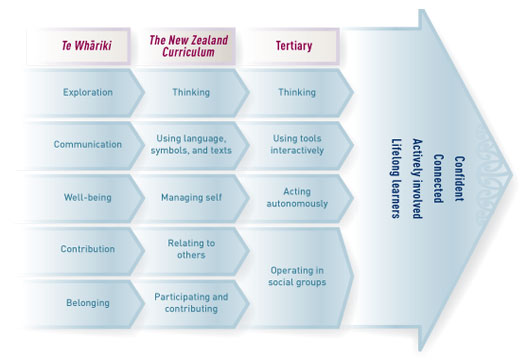
Our school Think Tank team pulls together some of the areas of the new curriculum and our inquiry learning. It is made up of management staff, team leaders, our cluster facilitator and myself. Our first job was looking at inquiry models and pulling it altogether to work with staff on creating and formulating an EPS model of inquiry.
The next stage in the Think Tank team is to look at the Values, Key Competencies and Principles. We had a look at a few schools examples of how they are using these and parts of them in their school community. The team has now divided off into 3 smaller teams to focus on each area. I am taking part in the Key Competencies team - we are interested in seeing how these are being brought into school around NZ and what different schools are doing.
This week I am also going to be asking students around the school what they think each of the Key Competencies mean and why they might be important for them to know about.
We are also using the NZ Curriculum Online website. If you are able to share what your school is planning, doing or working on with Key Competencies I would love to know. We will be meeting again next week to share what we have found out.
Subscribe to:
Posts (Atom)